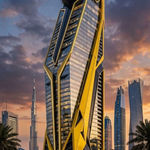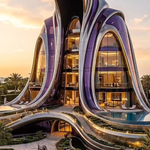
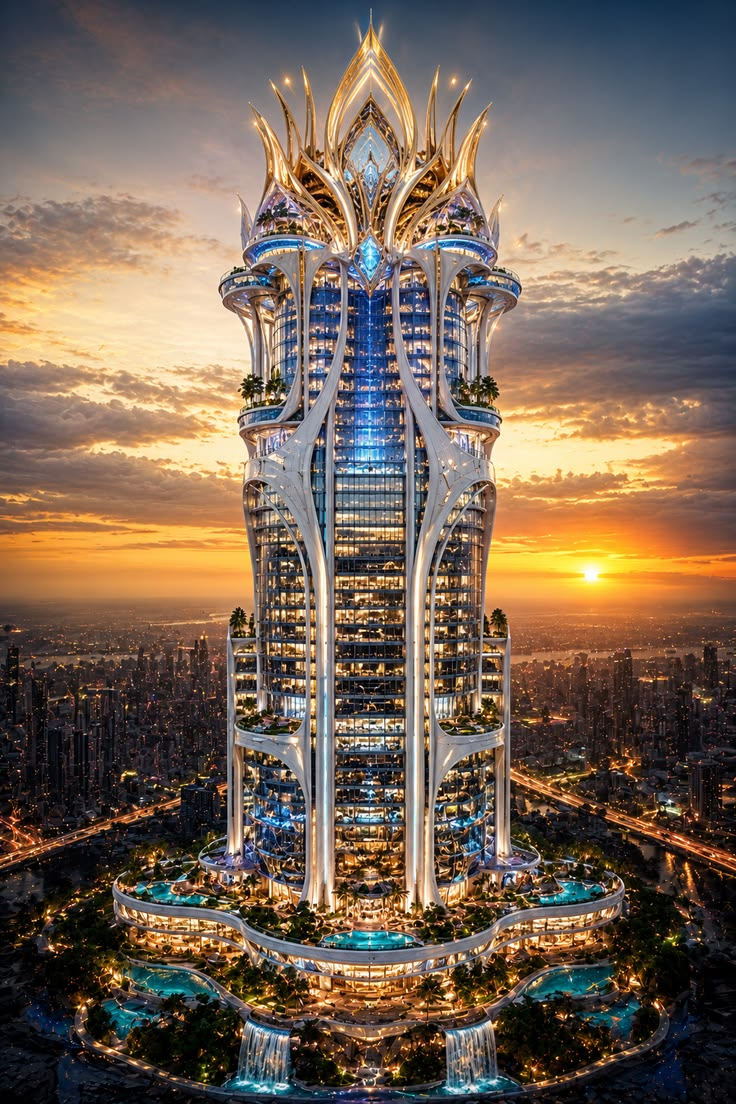

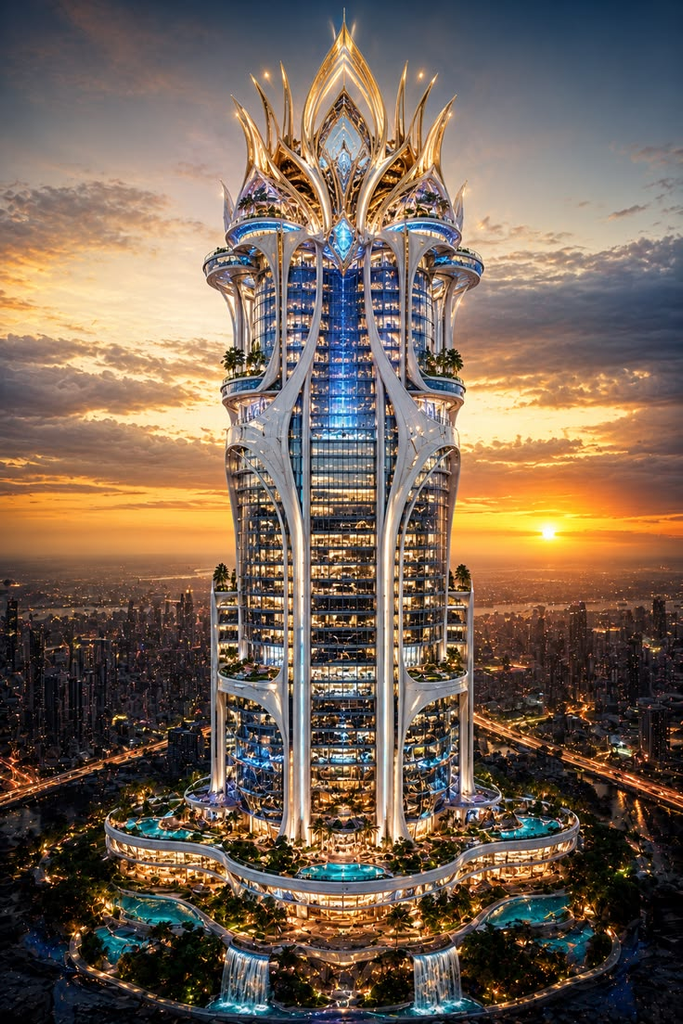
Skyscrapers are some of the most recognizable structures in modern architecture.
They rise above city streets, transform skylines, and often become symbols of economic activity, technological progress, and urban ambition. From office towers and residential high-rises to hotels and mixed-use developments, skyscrapers have become an important part of the identity of many major cities around the world.
But why do cities build so high?
At first, the answer seems simple: cities need more space, and building upward allows them to accommodate more people and activities without expanding endlessly outward.
That is certainly one reason.
But the story is more complicated than simply “there is not enough land.” Skyscrapers are the result of a combination of land values, population density, transportation, technology, economics, planning regulations, architectural ambition, and changing lifestyles.
A skyscraper is not simply a tall building.
It is a particular response to the challenges and opportunities created by dense urban environments.
What Is a Skyscraper?
A skyscraper is generally understood as a very tall building, usually containing multiple floors and designed to accommodate significant amounts of residential, commercial, office, hotel, or mixed-use space.
There is no single worldwide height that officially defines a skyscraper.
What counts as a skyscraper can depend on architectural and industry conventions, although very tall buildings are often categorized using terms such as high-rise, skyscraper, supertall, and megatall.
What makes skyscrapers particularly interesting from an architectural perspective is that height affects almost every part of the design.
A tall building needs a different structural system from a low-rise building. It needs carefully planned elevators, mechanical systems, fire protection, foundations, circulation, wind resistance, and building services.
The taller a building becomes, the more complicated these systems can be.
So why go through all this complexity?
1. Cities Have Limited Land
One of the most obvious reasons cities build skyscrapers is that land in desirable urban areas is limited.
A city center may contain valuable transportation connections, businesses, cultural institutions, universities, government buildings, and established neighborhoods.
There may simply not be enough land to build everything at a low density.
Building upward provides another option.
Instead of spreading a building across a large horizontal site, architects can stack floors vertically.
A relatively small piece of land can therefore accommodate offices, apartments, hotels, restaurants, shops, and other functions.
This is one of the fundamental ideas behind vertical urban development.
Rather than continually expanding outward, a city can increase the amount of usable floor space within an existing urban area.
2. Skyscrapers Accommodate High Population Density
Some cities have very large populations within relatively limited geographic areas.
High-rise residential buildings allow many households to live within a comparatively small footprint.
Instead of constructing hundreds of individual houses across a large area, a tall residential building can stack many homes vertically.
This can be especially useful in dense urban areas where housing demand is high and available land is limited.
However, density itself is not automatically good or bad.
What matters is how density is planned.
A tall building needs supporting infrastructure such as transportation, water, electricity, drainage, public spaces, schools, services, and emergency access.
A skyscraper works best as part of a larger urban system rather than as an isolated tower.
3. High Land Values Encourage Vertical Construction
Land prices are another major factor.
In central business districts and other highly desirable areas, land can be extremely valuable.
When land is expensive, developers may look for ways to generate more usable floor area from a relatively small site.
Building vertically can make this possible.
Imagine two buildings occupying the same piece of land.
A five-story building provides a certain amount of floor area. A thirty-story building can provide substantially more floor space without requiring a larger site.
Of course, constructing a skyscraper is much more expensive and technically demanding than constructing a low-rise building.
There is a point where additional height becomes less economically efficient.
Architects, developers, engineers, and planners therefore have to balance land costs against construction costs, expected demand, building regulations, and other factors.
4. Skyscrapers Support Business and Commercial Activity
Many skyscrapers are built to accommodate businesses.
Large companies may want offices close to transportation networks, clients, employees, financial institutions, government facilities, restaurants, hotels, and other businesses.
A concentration of commercial activity can create a powerful urban center.
The skyscraper becomes part of a larger business district rather than simply an individual building.
Office towers can also provide flexible floor plates that allow organizations to accommodate many employees within one building.
Modern skyscrapers may contain conference rooms, restaurants, retail spaces, gyms, shared workspaces, lounges, and other facilities.
Some are designed as mixed-use buildings where different activities occupy different parts of the tower.
5. Skyscrapers Can Create Mixed-Use Vertical Communities
A modern skyscraper does not necessarily contain only offices.
Increasingly, tall buildings can combine several functions.
A single tower might contain:
- Retail spaces at ground level
- Restaurants and cafes
- Offices on middle floors
- Hotels above
- Residential apartments
- Fitness facilities
- Shared amenities
- Observation spaces
This creates a kind of vertical neighborhood.
Instead of spreading different functions across a large horizontal area, the building stacks them vertically.
The architectural challenge is making these different uses work together.
Different occupants may have different circulation requirements, privacy needs, security systems, and operating schedules.
Careful planning is therefore essential.
6. Technology Made Skyscrapers Possible
Cities have built tall structures for centuries, but modern skyscrapers became practical because of technological developments.
One of the most important inventions was the modern elevator.
Without reliable elevators, climbing dozens of floors every day would be impractical for most people.
Structural engineering also played a major role.
Advances in steel and reinforced concrete allowed architects and engineers to create taller and more structurally efficient buildings.
Modern foundations, mechanical systems, fire protection, curtain-wall construction, computer modeling, and building services have all contributed to the development of skyscrapers.
In other words, skyscrapers are partly a product of technological progress.
Architecture provides the design, but engineering makes extreme height possible.
7. Structural Design Is Central to Skyscraper Architecture
Height creates enormous structural challenges.
A tall building must support its own weight while resisting forces such as wind and, in some regions, earthquakes.
Wind becomes particularly important as buildings become taller.
The upper levels of a skyscraper can experience significant movement, so architects and structural engineers need to consider both the strength of the building and the comfort of its occupants.
Different structural systems can be used depending on the height, shape, location, and purpose of the building.
These may include rigid frames, braced frames, core systems, outrigger systems, tube structures, and other engineering approaches.
The structure is not simply hidden behind the architecture.
In some skyscrapers, it becomes an important part of the visual identity of the building.
8. Skyscrapers Can Define a City’s Skyline
There is also a cultural and symbolic reason cities build skyscrapers.
Tall buildings are highly visible.
They can become landmarks that help define a city’s image.
A distinctive tower can appear in photographs, films, advertisements, tourism campaigns, and city maps.
The skyline becomes part of the identity of the place.
This is one reason skyscraper design often receives considerable architectural attention.
The shape, materials, lighting, proportions, and position of a tower can influence how the entire city is perceived.
However, a skyline is not simply a collection of tall buildings.
Its character depends on the relationship between towers, streets, historic structures, parks, waterfronts, and other urban elements.
9. Skyscrapers Can Mark Important Places
A tall building can also act as a visual marker.
Because it rises above surrounding structures, it can help people understand where they are within a city.
A distinctive tower may become a reference point visible from many parts of the urban area.
This can contribute to wayfinding and orientation.
However, the effectiveness of a landmark depends on context.
If every building is designed to compete for attention, the skyline can become visually chaotic.
A strong cityscape often contains different levels of visual importance, with some buildings acting as landmarks while others provide a quieter background.
10. Building Upward Can Preserve Land for Other Uses
Vertical development can sometimes allow cities to accommodate more people and activities while leaving other land available for parks, infrastructure, public spaces, or natural areas.
This does not mean that skyscrapers automatically create sustainable cities.
A very tall building can consume significant quantities of materials and energy during construction.
The overall environmental impact depends on many factors, including building efficiency, transportation patterns, construction materials, energy sources, lifespan, and how the surrounding urban area is planned.
Nevertheless, concentrating development can be one strategy for managing land efficiently.
The key is how the density is integrated into the wider city.
11. Skyscrapers Can Encourage Public Transportation
Dense urban development can support public transportation when it is planned appropriately.
A large number of people working or living within a relatively small area can create strong demand for rail, buses, walking, and other forms of shared transportation.
This can reduce the need for every person to travel by private car.
But again, density alone is not enough.
A skyscraper surrounded by large highways and isolated parking areas may produce a very different urban experience from a skyscraper connected to a walkable street network and efficient public transportation.
The building and its surroundings need to be considered together.
12. Skyscrapers Create Vertical Public Spaces
One interesting development in contemporary architecture is the idea that tall buildings can include spaces intended for public or shared use.
Observation decks are an obvious example.
But skyscrapers can also include public gardens, terraces, restaurants, cultural spaces, galleries, plazas, and elevated communal areas.
These spaces can help make a tall building more than a private structure.
Some towers use sky gardens or planted terraces to introduce greenery at different levels.
Others create large communal spaces where occupants can meet and interact.
This raises an interesting architectural question:
Can a skyscraper function like a small city in the sky?
In some ways, it can.
13. Skyscrapers Can Respond to Different Climates
Tall buildings need to respond carefully to their environmental conditions.
A skyscraper in a hot climate may require shading, efficient glazing, controlled solar exposure, ventilation strategies, and high-performance building systems.
A tower in a cold climate needs to address heat loss, insulation, wind, and winter conditions.
Building orientation can influence solar exposure.
Facade design can control daylight and heat.
Shading devices can reduce unwanted solar gain.
Double-skin facades and other advanced systems can also be used in certain projects.
The taller and more complex the building becomes, the more important environmental design becomes.
14. Skyscrapers Can Represent Economic Development
Throughout modern history, tall buildings have often been associated with economic growth and commercial activity.
A new skyscraper can represent investment in a city and provide space for businesses, residents, hotels, and other activities.
However, it is important not to assume that a skyscraper by itself proves that a city is economically successful.
A building can be architecturally impressive while surrounding economic and social conditions remain complex.
The relationship between skyscrapers and economic development depends on the particular city, market, policies, and development context.
15. Why Don’t Cities Build Skyscrapers Everywhere?
If building upward provides so much additional floor space, why doesn’t every city become filled with skyscrapers?
Because tall buildings are not always the most appropriate solution.
Construction costs increase with complexity.
Elevators and mechanical systems take up valuable space.
Structural requirements become more demanding.
Fire safety becomes more complicated.
Wind and seismic conditions need to be addressed.
Infrastructure must support large concentrations of people.
Planning regulations may limit building height.
Historic districts may require different approaches.
And in some locations, land is inexpensive enough that low- or medium-rise development makes more practical sense.
A skyscraper should therefore respond to a particular urban condition rather than being treated as a universal solution.
16. The Importance of the Ground Level
One of the most important architectural lessons about skyscrapers is that height is only part of the story.
A tower may look spectacular from several kilometers away, but people experience it most directly at street level.
The ground floor needs to connect with sidewalks, entrances, public spaces, transportation, landscaping, and neighboring buildings.
A skyscraper surrounded by blank walls and private barriers can create an unpleasant pedestrian environment.
A tower with active entrances, shops, restaurants, landscaping, seating, and welcoming public spaces can contribute much more positively to the street.
This is why architects often pay particular attention to the relationship between the tower and its base.
The Future of Skyscraper Architecture
The future of skyscrapers is likely to involve more than simply building taller.
Architects and engineers are exploring ways to make tall buildings more efficient, adaptable, comfortable, and environmentally responsive.
Future towers may incorporate more greenery, renewable energy systems, advanced materials, adaptable floor plans, mixed-use spaces, and improved transportation connections.
There is also growing interest in reusing existing buildings rather than always constructing new ones.
In some cases, adapting an existing structure may provide a more resource-conscious approach than demolishing it and building something entirely new.
The future of tall-building design will therefore involve questions about both height and long-term performance.