

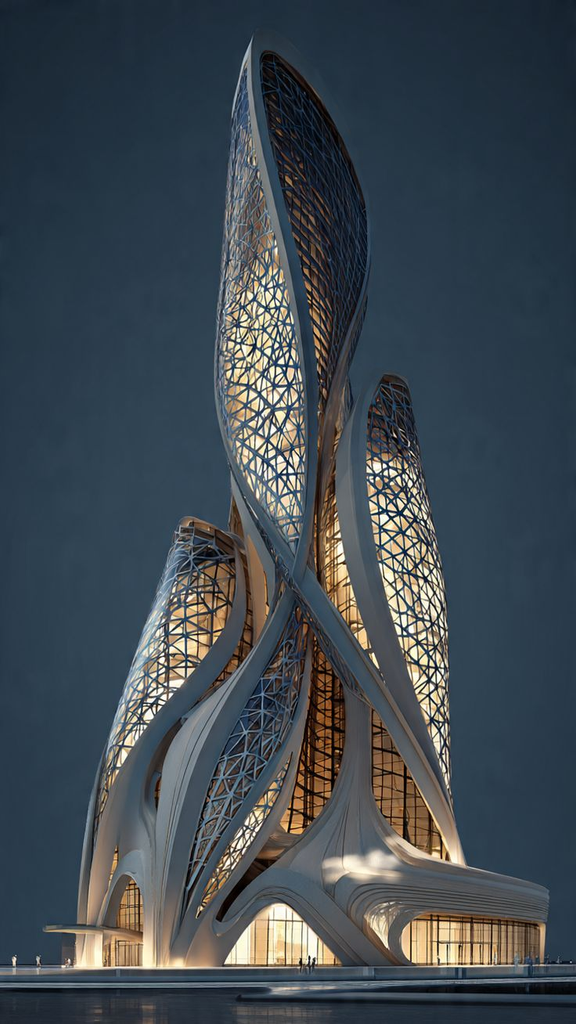
Walk through almost any city and you will notice that buildings do not all look the same.
Some have tall columns and carefully balanced façades. Others have simple geometric forms, large areas of glass, and almost no decoration. Some use exposed brick, pitched roofs, and traditional details, while others appear futuristic, sculptural, or highly experimental.
Why do buildings look so different?
One important reason is architectural style.
Architectural style describes the recognizable characteristics, principles, forms, materials, details, and design ideas that distinguish one group of buildings from another. It can be associated with a particular historical period, geographical region, culture, movement, architect, or way of thinking about design.
When we describe a building as Gothic, Classical, Modernist, Brutalist, Art Deco, or Contemporary, we are identifying characteristics that connect that building to a particular architectural tradition or approach.
But architectural style is more than a collection of visual features.
Style can tell us something about the time in which a building was created, the technology available to its designers, the culture of its users, the materials that were accessible, and the ideas that influenced the architect.
In that sense, architecture can almost be read like a historical document.
A building’s style can tell a story.
What Is Architectural Style?
In simple terms, architectural style is the distinctive visual and conceptual character of a building or group of buildings.
It can be recognized through elements such as:
- Building form
- Proportion
- Materials
- Ornamentation
- Roof design
- Windows
- Doors
- Columns
- Structural expression
- Spatial organization
- Colors
- Decorative details
- Construction techniques
However, style is not simply about appearance.
Two buildings may both have rectangular forms and flat roofs but belong to very different architectural traditions because they use different materials, proportions, philosophies, and spatial arrangements.
Likewise, two buildings from the same architectural style may look quite different because architects interpret styles in different ways.
Architectural style is therefore better understood as a shared language of design rather than a strict checklist.
Why Does Architectural Style Matter?
Architectural style helps us understand buildings.
Imagine looking at an old European cathedral with pointed arches, stained glass, elaborate stonework, and soaring vertical spaces.
Even if you know very little about architecture, you may immediately recognize that it belongs to a different tradition from a glass-and-steel office tower.
Style gives buildings an identity.
It also helps us understand architectural history.
As societies changed, their buildings changed with them.
New technologies became available.
New materials were developed.
Cities grew.
Cultural values changed.
Artists and architects challenged established traditions.
Political and economic conditions changed.
All of these factors contributed to the development of new architectural styles.
Studying style therefore helps us understand not only buildings but also the societies that created them.
Architectural Style and History
Architectural styles are closely connected to history.
Different periods have produced different approaches to design.
For example, ancient Greek architecture developed recognizable systems of columns and proportions. Roman architecture expanded the use of arches, vaults, and concrete. Medieval architecture produced several distinct traditions, including Romanesque and Gothic architecture.
Later, Renaissance architects looked back to Classical ideas while developing new approaches to proportion, symmetry, and spatial organization.
The Industrial Revolution introduced new materials and construction methods.
Iron, steel, and glass allowed architects to create buildings that would have been difficult to construct using traditional materials.
Eventually, modern architectural movements challenged historical ornament and emphasized new ideas about function, structure, technology, and simplicity.
The story continues today.
Contemporary architecture does not belong to one single style. Instead, it includes many different approaches influenced by technology, sustainability, culture, globalization, digital design, and changing patterns of life.
Traditional Architectural Styles
Traditional architectural styles often develop over long periods of time.
They may reflect local climate, culture, religion, materials, construction methods, and social customs.
For example, traditional buildings in different parts of the world may respond very differently to climate.
In hot regions, buildings may use courtyards, shaded openings, thick walls, verandas, screens, or other strategies for controlling sunlight and heat.
In colder regions, buildings may use compact forms, smaller openings, steep roofs, and materials suited to retaining heat and handling snow or rain.
These differences demonstrate that architectural style is not simply decoration.
Traditional architecture often contains practical knowledge developed through generations.
Classical Architecture
One of the most influential architectural traditions is Classical architecture, particularly the traditions associated with ancient Greece and Rome.
Classical architecture is strongly associated with:
- Columns
- Symmetry
- Proportion
- Pediments
- Entablatures
- Repetition
- Geometric order
- Monumental compositions
Greek architecture developed recognizable column orders, including Doric, Ionic, and Corinthian.
Roman architects adopted and expanded many Classical ideas while also making extensive use of arches, vaults, domes, and concrete.
Classical principles continued to influence architecture for centuries.
Even today, architects sometimes use Classical columns, symmetrical façades, and formal proportions in contemporary buildings.
Gothic Architecture
Gothic architecture developed in medieval Europe and is especially associated with churches and cathedrals.
Some recognizable Gothic characteristics include:
- Pointed arches
- Ribbed vaults
- Flying buttresses
- Large stained-glass windows
- Strong vertical emphasis
- Elaborate stone detailing
- Tall interior spaces
Gothic buildings often create a powerful sense of height.
The architecture draws the eye upward and uses light dramatically.
Large stained-glass windows can transform the interior atmosphere, while structural systems such as flying buttresses allowed walls to become more open.
This is an important example of how style can develop from both aesthetic ideas and structural possibilities.
Renaissance Architecture
The Renaissance brought renewed interest in the ideas of ancient Greece and Rome.
Architects emphasized:
- Symmetry
- Balance
- Proportion
- Geometry
- Classical elements
- Perspective
- Order
Buildings from this period often demonstrate carefully controlled relationships between their parts.
The Renaissance was not simply about copying ancient architecture.
Architects studied Classical ideas and developed them in new ways.
This period also reinforced the idea of architecture as an intellectual discipline involving mathematics, proportion, art, and philosophy.
Baroque Architecture
Baroque architecture developed later and often introduced a greater sense of movement, drama, and theatricality.
Baroque buildings may feature:
- Curved forms
- Dramatic façades
- Strong contrasts of light and shadow
- Elaborate ornament
- Monumental interiors
- Dynamic spatial compositions
Where some Classical buildings emphasize calm symmetry and restraint, Baroque architecture can feel more energetic and expressive.
The style demonstrates how architectural design can be used to create emotional experiences.
Neoclassical Architecture
Neoclassical architecture returned strongly to Classical ideas during the eighteenth and nineteenth centuries.
It often emphasized:
- Symmetry
- Columns
- Pediments
- Formal entrances
- Geometric clarity
- Monumental scale
- Restrained ornament
Neoclassical architecture became especially influential in civic and institutional buildings.
The style could communicate ideas such as order, stability, dignity, and permanence.
Gothic Revival
Architectural history did not move in a simple straight line.
Architects sometimes returned to earlier styles.
The Gothic Revival movement, for example, brought medieval Gothic characteristics back into use during the nineteenth century.
Buildings could feature pointed arches, towers, decorative stonework, and other Gothic-inspired elements while using modern construction techniques.
This reminds us that architectural style can be deliberately revived and reinterpreted.
Architecture is not always about inventing something completely new.
Sometimes it is about rediscovering and adapting something from the past.
Art Nouveau
Art Nouveau developed around the late nineteenth and early twentieth centuries.
It is often associated with:
- Flowing curves
- Plant-inspired forms
- Decorative patterns
- Organic lines
- Elaborate craftsmanship
- Integration of architecture and decorative arts
Art Nouveau designers often rejected rigid historical imitation and sought a more organic visual language.
The style appeared not only in buildings but also in furniture, graphic design, interiors, and other forms of art.
Art Deco
Art Deco became especially influential during the 1920s and 1930s.
Its architecture often features:
- Geometric patterns
- Symmetry
- Bold forms
- Decorative details
- Stepped shapes
- Stylized motifs
- Rich materials
Art Deco buildings can have a strong sense of glamour and modernity.
The style is particularly recognizable in some urban commercial buildings, theaters, hotels, and skyscrapers.
Modern Architecture
Modern architecture emerged from major changes in technology, industry, society, and architectural thinking.
Modernist architects often challenged traditional ornament and historical imitation.
They explored:
- Simplicity
- Functional planning
- Geometric forms
- New materials
- Structural expression
- Open plans
- Large areas of glass
- Steel and reinforced concrete
The famous idea “form follows function” became closely associated with modern architectural thinking, although the relationship between form and function is more complex than the phrase suggests.
Modern architecture also encouraged architects to think differently about what buildings could be.
Instead of copying historical styles, architects could develop forms appropriate to modern life and modern technology.
International Style
The International Style became an influential approach within modern architecture.
It is commonly associated with:
- Rectangular forms
- Flat roofs
- Minimal ornament
- Steel and concrete structures
- Glass façades
- Open interior arrangements
- Emphasis on volume rather than heavy mass
The approach sought a modern architectural language that could be applied across different locations.
This led to both admiration and criticism.
Supporters saw the approach as a clear expression of modern life and technology.
Critics sometimes argued that buildings inspired by international modernism could ignore local culture, climate, and architectural traditions.
That debate continues to influence architectural thinking.
Brutalist Architecture
Brutalism became particularly influential during the mid-twentieth century.
The style is often associated with:
- Exposed concrete
- Massive forms
- Strong geometric shapes
- Heavy visual weight
- Repetitive elements
- Expression of structure and materials
The word “Brutalism” comes from the French term béton brut, meaning “raw concrete.”
Despite popular associations with concrete and massive buildings, Brutalism is more complicated than simply “buildings made of concrete.”
The movement involved ideas about structure, material honesty, social architecture, and the expression of construction.
Some Brutalist buildings are monumental, while others are more carefully scaled to human use.
Postmodern Architecture
Postmodern architecture emerged partly as a reaction against some of the strict principles associated with modernism.
Postmodern architects often reintroduced:
- Historical references
- Ornament
- Color
- Symbolism
- Humor
- Variety
- Complex forms
Instead of insisting on one universal architectural language, postmodernism embraced greater diversity.
A postmodern building might combine Classical references with modern materials or use familiar architectural symbols in unexpected ways.
This approach demonstrated that architecture could be playful as well as serious.
Contemporary Architecture
Today, we often use the term Contemporary architecture to describe current or relatively recent approaches.
However, contemporary architecture is not one single style.
It includes a wide range of ideas and expressions.
Contemporary buildings may use:
- Parametric design
- Sustainable systems
- Advanced materials
- Digital fabrication
- Large glass surfaces
- Complex geometries
- Passive environmental strategies
- Reinterpreted traditional forms
- Minimalist compositions
- Organic shapes
One contemporary building may look completely different from another.
This diversity is one of the defining characteristics of architecture today.
Architectural Style Is Influenced by Culture
Culture has a powerful influence on architecture.
Buildings reflect the values, traditions, beliefs, lifestyles, and social structures of the communities that create them.
Religious architecture is an obvious example.
Different religions have developed different spatial traditions and architectural expressions.
Homes can also reflect culture.
The way families interact, the importance of private and public spaces, cooking traditions, outdoor living, social gatherings, and relationships between generations can all influence architectural design.
This means architectural style cannot always be understood simply through visual features.
You also need to understand the culture behind those features.
Climate Can Shape Architectural Style
Climate is another major influence.
Before modern mechanical heating and cooling systems, architects had to work closely with local environmental conditions.
Buildings developed strategies for dealing with:
- Heat
- Cold
- Rain
- Wind
- Sunlight
- Humidity
- Snow
These strategies often became recognizable characteristics of regional architecture.
For example, shaded outdoor spaces can be particularly useful in hot climates.
Steep roofs can help deal with heavy rainfall or snow.
Courtyards can create protected outdoor spaces while supporting ventilation.
Architectural style can therefore emerge partly from practical environmental responses.
Local Materials and Architectural Style
The materials available in a region can also influence architectural style.
Historically, communities often built with materials that were relatively accessible locally.
This might include:
- Stone
- Clay
- Brick
- Timber
- Earth
- Bamboo
- Thatch
Local materials influence construction techniques and appearance.
They also connect buildings to their surroundings.
Modern architecture has made it possible to transport materials across enormous distances, but local materials remain important in many architectural traditions.
Using local materials can reduce transportation requirements, support local industries, and create a stronger relationship between a building and its place.
Technology Changes Architectural Style
Architecture changes when technology changes.
New construction technologies can make new forms possible.
The development of reinforced concrete allowed architects to create large spans, cantilevers, thin structures, and unusual geometries.
Steel made taller buildings and larger structural spans possible.
Glass technology enabled increasingly transparent façades.
Digital design tools now allow architects to explore extremely complex geometries and analyze building performance in ways that were previously difficult.
Technology does not automatically determine style, but it expands the possibilities available to architects.
Is Architectural Style Just About Appearance?
No.
This is one of the most important things to understand.
Architectural style is visible, but it is not merely decoration.
Style can reflect deeper ideas about:
- How people should use space
- How buildings should relate to nature
- How structure should be expressed
- How technology should be used
- How much ornament is appropriate
- How architecture should relate to history
- How buildings should respond to climate
- What a society values
A building’s appearance is often the visible result of these deeper decisions.
Can One Building Have More Than One Style?
Yes.
Buildings do not always fit neatly into categories.
An architect may combine elements from different traditions.
A contemporary house might use a modern structural system while incorporating traditional materials and regional spatial patterns.
A new civic building might use Classical proportions while employing modern technology.
A historic building may have been renovated or expanded using a contemporary architectural language.
This creates buildings that are difficult to classify using a single label.
That is perfectly normal.
Architectural styles are useful categories, but real architecture is often more complicated than categories suggest.
Style vs. Design
It is also important to distinguish style from design.
Design is the broader process of solving architectural problems and creating a building.
Style is the particular visual and conceptual language through which those design decisions are expressed.
Two architects can solve the same functional problem in completely different styles.
For example, both may design a small house with three bedrooms, two bathrooms, a kitchen, and a living area.
One might use a minimalist modern approach.
Another might use a traditional pitched-roof approach.
The function may be similar, but the architectural expression can be very different.
Style vs. Function
Architectural style and architectural function are related but not identical.
Function asks:
What does the building need to do?
Style asks:
How is the building expressed, and what architectural language does it use?
A hospital can be modern, traditional, Brutalist, or contemporary in style.
A house can be minimalist, Classical, vernacular, modern, or eclectic.
The same function can exist within different styles.
Likewise, the same style can be used for different building types.
This is why style should not be confused with function.
Why Architects Choose a Particular Style
Architects may choose or develop a particular architectural language for many reasons.
The client may have a preference.
The site may suggest a particular response.
The local context may influence the design.
The architect may want to reference history.
The building may need to fit within a historic district.
The project may be intended as a landmark.
The climate may encourage particular forms.
Available materials may influence the appearance.
Or the architect may simply be exploring a particular design philosophy.
In many cases, several of these factors interact.
Should Architects Follow a Style?
There is no requirement that every architect must work within one recognizable style.
Some architects become strongly associated with particular approaches.
Others deliberately change their style from project to project.
Architecture is a creative discipline, and architects may develop different approaches depending on the building, client, site, and purpose.
Following a style simply because it is fashionable can sometimes produce superficial results.
A stronger approach is to understand the principles behind a style and decide whether those principles make sense for the project.
Architectural Style and Identity
Style can give a building identity.
Think about how quickly people can recognize certain famous buildings.
Sometimes the building’s form is so distinctive that it becomes part of the identity of the city itself.
But architectural identity does not always require an unusual shape.
A building can be memorable because of its materials, proportions, entrance, roof, courtyard, relationship to the street, or careful use of detail.
Architectural identity can come from restraint just as easily as from complexity.
The Importance of Context
One of the most important considerations when discussing architectural style is context.
A style that works beautifully in one location may feel inappropriate in another.
Architecture should respond to its surroundings.
This does not mean that every building must imitate neighboring buildings.
Sometimes contrast can be valuable.
But architects need to understand the history, culture, climate, urban character, materials, and social conditions of the place.
Good architecture does not necessarily disappear into its surroundings, nor does it necessarily dominate them.
It establishes a meaningful relationship with them.
Can Architectural Styles Be Combined?
Absolutely.
This approach is sometimes described as eclectic architecture.
Eclecticism involves combining elements from different architectural traditions.
For example, a building might combine Classical columns with modern materials or traditional regional forms with contemporary interior spaces.
The challenge is making the combination feel intentional.
Randomly adding historical details to a building does not automatically create a successful architectural style.
The elements need to relate to one another through proportion, material, scale, color, or another organizing principle.
Architectural Style Is Always Changing
Architectural style is not fixed.
It changes as society changes.
New technologies emerge.
Environmental concerns become more important.
People develop new ways of working and living.
Cities become denser.
Cultural ideas evolve.
Architects experiment.
As these changes happen, architectural styles also change.
This is why the architecture of one generation can look completely different from that of another.
What seems modern today may eventually become a historical architectural style itself.
How to Identify an Architectural Style
When looking at an unfamiliar building, you can begin by asking a few questions.
What is the overall form?
Is it symmetrical, irregular, monumental, compact, vertical, horizontal, or organic?
What materials are used?
Is it primarily stone, brick, concrete, steel, glass, timber, or something else?
What do the windows look like?
Are they large, small, narrow, arched, repetitive, deeply recessed, or arranged irregularly?
What does the roof look like?
Is it flat, pitched, curved, domed, or highly decorative?
Is there ornament?
Look for columns, carvings, moldings, patterns, decorative screens, or other details.
How is the building proportioned?
Does it feel heavy or light? Horizontal or vertical? Monumental or human-scaled?
What does the structure look like?
Is it hidden or expressed?
What is the relationship with the site?
Does the building blend with the surroundings, contrast with them, or appear to grow from the landscape?
These questions can help you begin recognizing architectural styles.
Architectural Style Should Not Limit Creativity
One of the most interesting things about architecture is that styles provide inspiration without necessarily imposing absolute rules.
An architect can learn from history without copying it.
They can study Gothic architecture and use its principles of verticality and light in a contemporary building.
They can study traditional African architecture and reinterpret its ideas about climate, community, materials, and outdoor space using modern construction.
They can study Classical architecture and explore its principles of proportion and order without reproducing an ancient temple.
The goal does not always have to be imitation.
It can be interpretation.
Final Thoughts
So, what is architectural style?
Architectural style is the recognizable language through which a building expresses its form, materials, proportions, details, structure, cultural influences, and design ideas.
It helps us understand why buildings from different periods and places look and feel different.
From Classical columns and Gothic arches to Modernist simplicity, Brutalist concrete, Art Deco geometry, and contemporary experimentation, architectural styles reflect changing technologies, cultures, environments, and ideas.
But style is not simply about making a building look a certain way.
Behind every architectural style is a set of decisions and influences.
Climate can shape it.
Culture can shape it.
Technology can shape it.
Materials can shape it.
Function can shape it.
History can shape it.
And the architect’s own ideas can shape it.
This is why understanding architectural style is about more than memorizing names and dates.
It is about learning how to read buildings.
Once you begin paying attention to form, proportion, materials, structure, ornament, space, light, and context, buildings start to tell you more about themselves.
You begin to see that a building is not simply an object sitting on a piece of land.
It is a product of its time, place, culture, technology, and purpose.
And that is what makes architectural style so fascinating.
Architecture has many different languages, and architectural style is one of the ways those languages become visible.