
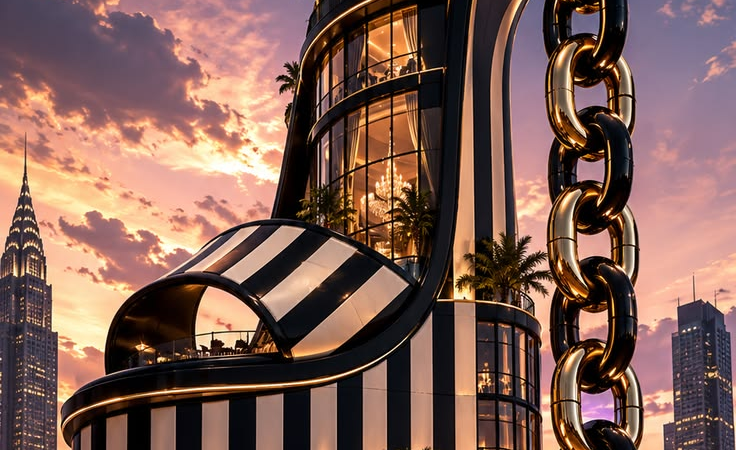
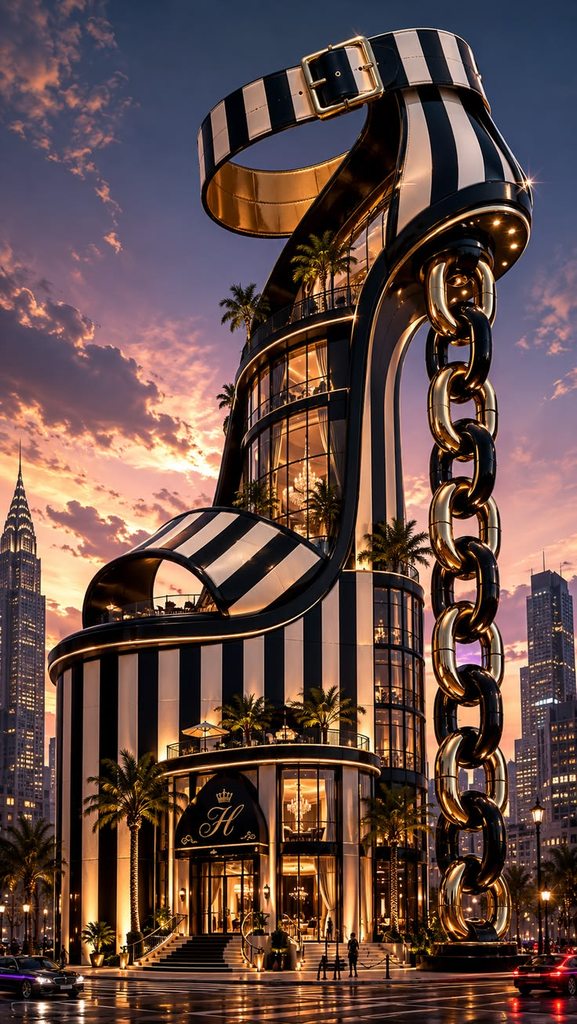
Architecture is often described as the art and science of designing buildings, but that simple definition leaves out one of the most interesting questions architects face: Should a building be designed around how it looks, or around how it works?
This question leads us to one of the oldest and most important ideas in architectural design: form vs. function.
Form refers to the physical appearance and visual character of a building. It includes its shape, size, proportions, materials, colors, textures, façade, roofline, openings, and overall presence. Function, on the other hand, refers to what the building is meant to do. It considers how people use the spaces, how they move through them, what activities take place there, and how well the building serves its purpose.
At first glance, form and function may seem like two competing ideas. A designer might want to create an unusual, visually striking building, while the client may be more concerned with practicality, comfort, maintenance, and cost. But good architecture rarely treats these ideas as complete opposites.
In successful architecture, form and function usually work together.
A beautiful building that is uncomfortable, difficult to use, or poorly suited to its environment may not be successful architecture. At the same time, a building that performs its practical purpose but has no sense of identity, character, or visual quality can feel uninspiring.
The real challenge is finding the balance between the two.
Understanding Form in Architecture
When architects talk about form, they are talking about the physical expression of a building.
Imagine looking at a building from across the street. Before you enter it or understand what happens inside, you notice its shape. You may see a tall tower, a long horizontal structure, a series of curved walls, a simple rectangular volume, or a collection of smaller forms connected together.
That first visual impression is part of the building’s form.
Architectural form can be influenced by many things. The architect may begin with a simple geometric shape and modify it according to the site’s conditions. They may create openings to bring in daylight, carve away sections to create courtyards, raise part of the building to improve ventilation, or use a particular roof form to respond to climate.
Form is therefore not simply about making a building “look good.”
It can communicate an idea.
A monumental government building may use strong proportions and heavy materials to create a sense of permanence. A museum may have an expressive form designed to attract visitors and become a landmark. A house may use simple forms and natural materials to create a calm relationship with its surroundings.
Form can also communicate the identity of a place.
Think about buildings that you can recognize almost immediately from photographs. Their forms are often memorable enough to become part of the visual identity of a city.
Understanding Function in Architecture
If form is concerned with what a building looks and feels like, function is concerned with what the building needs to do.
Every building has a purpose.
A school needs classrooms, circulation spaces, administrative areas, sanitation facilities, gathering spaces, and places for students and teachers to interact. A hospital requires treatment rooms, patient areas, operating facilities, circulation routes, medical support spaces, and carefully controlled environments.
A house has different requirements. It may need bedrooms, kitchens, bathrooms, living spaces, storage, outdoor areas, and spaces for family activities.
Function asks important questions:
- Who will use the building?
- What activities will take place there?
- How many people will use it?
- How should people move through the building?
- Which spaces need to be private?
- Which spaces should be connected?
- How much natural light is required?
- How should ventilation work?
- How accessible is the building?
- How easy will it be to maintain?
These questions may not sound as glamorous as choosing a façade or selecting beautiful materials, but they are fundamental to architecture.
A building exists to serve people.
If people constantly struggle to understand where to enter, cannot move comfortably through the spaces, experience excessive heat, or find that rooms do not support their activities, the building is not functioning as well as it should.
This is why architects spend so much time studying space planning, circulation, human behavior, ergonomics, accessibility, environmental conditions, and building performance.
The Famous Idea: “Form Follows Function”
One of the most famous phrases associated with this discussion is “form follows function.”
The idea is generally associated with architect Louis Sullivan, who argued that a building’s outward expression should relate to its purpose and internal organization.
The principle became especially influential in modern architecture.
The basic idea is relatively straightforward: the purpose of a building should influence its physical form.
For example, consider a library.
A library needs spaces for reading, studying, storing books or accessing digital resources, moving quietly between areas, and sometimes working collaboratively. These requirements can influence the building’s form.
Large windows may be introduced to provide natural daylight. Quiet reading rooms may be placed away from noisy public areas. Shelving systems may influence the dimensions of interior spaces. A central reading hall might become the architectural focus of the building.
The final form is therefore partly shaped by the activities happening inside.
However, “form follows function” does not mean that every building should look purely utilitarian.
Architecture is more complicated than that.
Does Function Always Come First?
Not necessarily.
There are buildings where form plays an enormous role in shaping the experience.
Consider a cultural center, museum, concert hall, or religious building. These buildings often need to do more than accommodate activities. They may also create emotion, represent cultural values, establish a sense of identity, or become symbols for a community.
In such cases, architectural form can become an important part of the building’s purpose.
A museum with an unusual façade may attract visitors. A dramatic concert hall may create a memorable experience before visitors even enter the performance space. A religious building may use height, light, geometry, or materials to create a particular emotional atmosphere.
Here, form is not simply decoration added after the functional planning is finished.
Form itself can contribute to function.
That is an important distinction.
When Form and Function Work Together
The most interesting architecture often appears when form and function are not treated as separate stages.
Instead of thinking:
First we make the building work, then we make it beautiful,
an architect can think:
How can the way the building works become part of what makes it beautiful?
This approach can produce much stronger results.
Imagine a building designed for a hot climate. Instead of creating a glass box and relying entirely on mechanical cooling, an architect might introduce deep overhangs, shaded courtyards, screened openings, thick walls, and carefully positioned windows.
These elements serve functional purposes.
They reduce solar heat, improve shade, encourage ventilation, and create more comfortable spaces.
But they also influence the appearance of the building.
The result is a form that looks the way it does partly because of how the building responds to its environment.
This is where form and function become difficult to separate.
Form Can Influence How People Feel
Architecture is not only about physical performance. Buildings also affect human emotions and behavior.
A narrow corridor can feel very different from a wide, naturally lit passage. A low ceiling can create intimacy, while a tall space can feel monumental. A courtyard can create a sense of openness within an otherwise enclosed building.
The form of a space can influence how people experience it.
This is why architects think carefully about proportions, scale, light, materials, sound, views, and movement.
For example, a hospital waiting area designed only around the number of chairs it can accommodate might technically satisfy a requirement. But an architect may also consider how patients feel while waiting.
Could natural light make the space more pleasant?
Could views of greenery reduce the sense of confinement?
Could the seating arrangement provide privacy?
Could clear circulation reduce confusion?
These questions show that function itself includes more than simply fitting activities into a room.
Human experience is part of function.
The Problem With Designing Only for Form
There is nothing wrong with ambitious or experimental architectural forms. In fact, architecture would be much less interesting without them.
The problem occurs when appearance becomes more important than everything else.
A building can be visually spectacular but difficult to maintain. It can photograph beautifully while performing poorly in its climate. It can have dramatic spaces that are rarely useful. It can use expensive materials that deteriorate quickly or create unnecessary construction challenges.
This does not automatically make an expressive building bad architecture. Sometimes difficult forms are justified by a building’s cultural, artistic, or social goals.
But architects have to ask whether the visual ambition is actually contributing to the project.
A building should not be unusual simply for the sake of being unusual.
There should be a reason behind the major design decisions.
The Problem With Designing Only for Function
The opposite extreme has its own limitations.
Imagine a building designed entirely as a collection of efficient rooms.
Everything fits.
The circulation is straightforward. The structure is economical. The spaces work.
But the building has no sense of identity. There is no thoughtful relationship between materials, light, proportion, landscape, or surroundings.
It may function, but it may not provide a memorable architectural experience.
Architecture has always been more than shelter and utility. People build places to live, work, gather, worship, learn, celebrate, remember, and express cultural values.
Beauty and meaning can therefore have practical importance.
A school that students enjoy being in may influence their experience of learning. A public space that feels welcoming may encourage people to gather. A workplace with comfortable and inspiring spaces may influence how people interact.
Function and experience are connected.
Form, Function, and the Site
The relationship between form and function becomes even more interesting when the building’s location is considered.
Architecture does not exist in isolation.
A building sits on a particular piece of land, experiences a particular climate, responds to surrounding buildings, and becomes part of a larger community.
A design that works perfectly in one location may not work in another.
For example, a building in a hot and humid environment may require careful consideration of shade, cross-ventilation, rainfall, humidity, and solar exposure. A building in a cold climate may have different priorities involving insulation, solar gain, snow, and heat retention.
The site’s characteristics can therefore influence both function and form.
The building’s orientation may affect its shape. The position of windows may respond to the sun. Roof forms may respond to rainfall. Courtyards may encourage outdoor living. Materials may be selected based on local availability, durability, and cultural identity.
In this sense, the environment becomes part of the design conversation.
Form and Function in Residential Architecture
The relationship is particularly easy to see in houses.
Consider a simple family home.
The occupants may want an open kitchen and living area because they enjoy entertaining. Parents may want bedrooms located away from noisy social spaces. Children may need spaces where they can study. The house may need good visual connections between indoor and outdoor areas.
These functional requirements can influence the shape and organization of the house.
An architect might create a central living space around which private rooms are arranged. They might use large openings toward a garden and smaller openings toward a busy street.
The result is not simply a collection of rooms.
The organization of the house creates a particular architectural form.
And that form, in turn, affects how the family experiences the home.
Form and Function in Public Buildings
Public buildings make the relationship even more complex because they often serve many different groups of people.
An airport needs to process large numbers of passengers efficiently. A library needs to support concentration, research, and community activities. A theater needs to manage audiences, performers, equipment, acoustics, and backstage operations.
The building’s form has to accommodate these different demands.
A well-designed public building often makes its function understandable through its architecture.
You may instinctively know where the entrance is.
You may recognize the main public space.
You may understand where to move next without constantly checking signs.
When architecture communicates its function clearly, people can navigate the building more comfortably.
Technology Is Changing the Relationship
Modern technology has expanded what architects can do with form.
Computer-aided design, parametric modeling, digital fabrication, advanced structural systems, and new building materials allow architects to create forms that would have been extremely difficult or expensive to produce in the past.
But technological possibilities also create an important question:
Just because we can create a particular form, does that mean we should?
Technology is most valuable when it helps solve a meaningful architectural problem or creates a valuable experience.
A complex façade might improve solar performance. A digitally fabricated structure might reduce material waste. A computationally designed building envelope might respond more precisely to environmental conditions.
In these situations, technology can strengthen the relationship between form and function.
Sustainability Connects Form and Function
Sustainable architecture provides another powerful example.
A sustainable building cannot simply be visually attractive. It needs to consider energy consumption, water use, material choices, durability, waste, environmental impact, and the long-term life of the building.
Many sustainable strategies directly influence architectural form.
Building orientation affects solar exposure.
Window placement affects daylight and heat gain.
Shading devices affect the façade.
Courtyards can influence ventilation and outdoor comfort.
Roof design can support rainwater collection or renewable energy systems.
Vegetation can provide shade and improve outdoor environments.
In other words, environmental performance can become visible in the architecture.
The building can express its response to climate rather than hiding it.
Is Form More Important Than Function?
There is no universal answer.
The importance of form and function depends on the building, its users, its location, its budget, its cultural context, and its purpose.
A warehouse may have different architectural priorities from a museum.
A family house may have different priorities from a hospital.
A temporary pavilion may have different priorities from a university building expected to last for generations.
Rather than asking which one is more important, it may be more useful to ask:
How can form and function support each other?
That question leads to a more complete understanding of architecture.
A Balanced Approach to Architecture
Good architecture is rarely about choosing beauty over practicality or practicality over beauty.
Instead, it involves understanding how different decisions influence one another.
The shape of a building can affect its energy performance.
The structure can influence the interior layout.
The interior layout can influence circulation.
Circulation can influence the location of entrances and stairs.
The climate can influence the façade.
The façade can influence the appearance of the building.
The materials can influence both appearance and durability.
The budget can influence the materials and construction methods.
Everything is connected.
This is one of the reasons architecture is such a complex profession.
An architect is constantly balancing different requirements and trying to bring them together into one coherent design.
Form vs. Function: A Simple Example
Imagine designing a small community library.
If you focus only on function, you might create a simple rectangular box containing shelves, tables, computers, offices, bathrooms, and circulation paths.
It works.
But now imagine taking those functional requirements and asking additional questions.
Where should natural light enter?
Where should children read?
Can the building create a quiet garden?
Can the entrance be welcoming?
Can the reading room become a central social space?
Can the roof provide shade?
Can the building respond to the local climate?
Can the materials reflect the character of the neighborhood?
These questions begin to transform functional requirements into architectural ideas.
The final building may still be simple.
But its simplicity can be intentional.
Its form can emerge from its function, its environment, its users, and its cultural context.
That is often where meaningful architecture begins.
Final Thoughts
The debate between form and function in architecture is not really about choosing one side.
Form gives architecture its physical expression, identity, character, and visual presence. Function gives architecture purpose, usability, comfort, and practical meaning.
One without the other can create limitations.
A building that looks impressive but does not serve its users well can become frustrating. A building that works efficiently but ignores human experience can become lifeless.
The strongest designs often find a relationship between the two.
They allow practical requirements to shape beautiful spaces. They use form to improve experience. They respond to climate, culture, structure, technology, and the needs of the people who will use them.
Ultimately, architecture is not simply about creating objects that look good or spaces that work.
It is about creating places where people can live, work, learn, gather, and experience life.
And when form and function are thoughtfully brought together, a building can become much more than a structure. It can become architecture with purpose, character, and meaning.