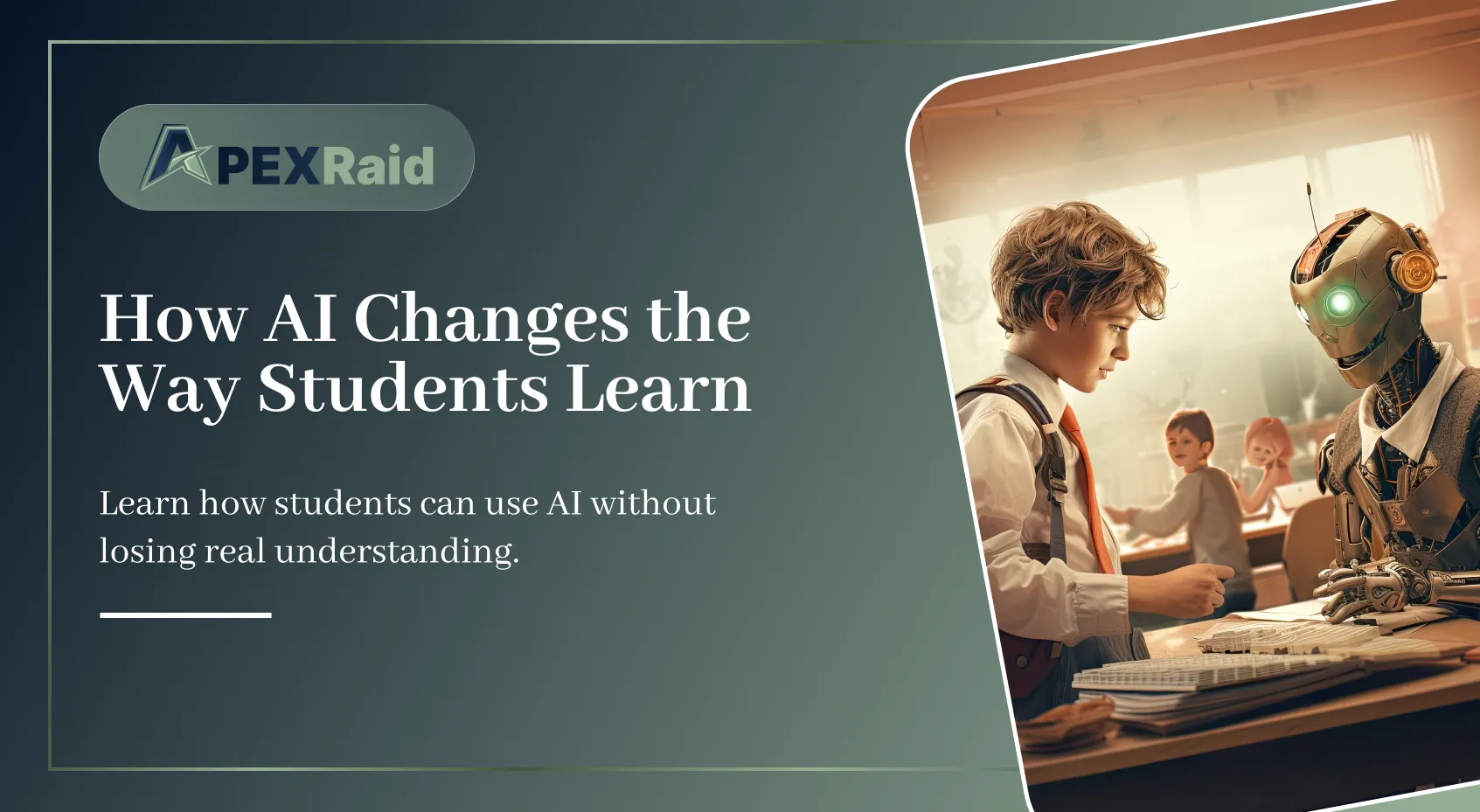
Students are using AI for explanations, summaries, brainstorming, and homework help. That can be useful, but it also changes the learning process in important ways.
The big question is not whether students should use AI. It is how they should use it without losing the chance to actually learn. Used well, AI can help students get unstuck. Used badly, it can quietly replace the thinking that makes education valuable.
Ways AI can help
AI can explain a concept in different words, offer study questions, help organize notes, and suggest practice ideas. For students who feel stuck, that kind of support can reduce frustration and build momentum.
It can also be useful for breaking big assignments into steps. That makes large projects feel less overwhelming and gives students a clearer path to follow.
Ways it can hurt
If students copy answers too quickly, they may skip the struggle that builds understanding. Learning often happens during the effort, not just at the finish line. AI can make that effort disappear if it is used carelessly.
Another risk is overconfidence. A student may think they understand a topic because the AI gave a nice explanation, but they may not be able to solve the problem on their own. That gap can show up later on exams or in real-world work.
What teachers and parents should watch
Instead of asking only whether students are using AI, it helps to ask how they are using it. Are they asking for explanations, or are they copying answers? Are they checking the result, or treating it like final truth? Those differences matter a lot.
Healthy use means the student is still engaged, still thinking, and still able to explain the answer in their own words.
The better approach
AI works best when it is used like a tutor, not a substitute. Ask it to explain, quiz you, or show steps. Do not let it replace the thinking you need to do yourself.
One useful strategy is to ask the AI for hints instead of full answers. Another is to use it after you have tried the problem yourself, so it can help you check your reasoning instead of doing the work for you.
How to build good habits
Students should be taught to verify facts, compare sources, and write in their own voice. They should also understand when AI use is allowed, when it is not, and why honesty matters in schoolwork.
The goal is not to fear the tool. The goal is to use it in a way that improves understanding instead of bypassing it.
Key takeaway
AI can support learning, but students still need to do the real thinking. The best use of AI is assistance, not avoidance.
If students use it carefully, it can become a study aid. If they use it carelessly, it can become a shortcut that weakens learning over time.