

HealthIntermediate
The Science of Sleep
Why do we sleep, what happens during different sleep stages, and what does the research say about sleep deprivation?
Take the challenge →Explore the science behind physical and mental wellbeing, from nutrition and exercise to sleep and the mind-body connection.
Health is influenced by biology, behaviour, environment, relationships, work, income and access to care. Educational content can explain body systems, common terms and questions worth asking. It cannot examine a person, review their history or provide an individual diagnosis. Similar symptoms can have very different causes, and urgency depends on details that a general article does not know. Readers should use ApexRaid health material for learning, not as a substitute for a qualified clinician.
Emergency symptoms, severe pain, breathing difficulty, sudden weakness, confusion, major injury, thoughts of self-harm or rapid deterioration require appropriate urgent services. Local guidance differs, so people should know how to reach emergency and poison resources where they live. Content should avoid both alarm and false reassurance. A responsible explanation states uncertainty, names red flags when appropriate and encourages professional evaluation when delay could matter.
Human physiology involves interacting systems rather than isolated parts. Homeostasis describes processes that keep conditions within workable ranges while the environment and activity change. Temperature, blood glucose, fluid balance and acidity are regulated through sensors, control signals and responses. These values are not perfectly fixed; healthy ranges vary with time and context. A feedback loop can become disrupted by illness, medication or extreme conditions.
Organs perform specialized roles while depending on circulation, nerves, hormones and immune function. The heart and blood vessels transport oxygen and nutrients, lungs exchange gases, kidneys regulate fluids and remove wastes, and the digestive system processes food. The nervous and endocrine systems coordinate responses at different speeds. Learning connections helps readers understand why a condition affecting one system can produce symptoms elsewhere, and why one symptom rarely proves one cause.
A symptom is an experience reported by a person; a sign is an observation or measurement that others can assess. Clinicians combine these with history, examination and appropriate tests. They consider how likely different causes were before testing and how new evidence changes those probabilities. A test can produce false positives and false negatives, so results must be interpreted in context rather than treated as automatic certainty.
Online symptom lists often include common experiences shared by many conditions. Matching several items can create anxiety without improving accuracy. Timing, severity, triggers, associated symptoms, medications and prior health can all matter. A useful preparation for an appointment is a concise record of what changed and when, not a fixed self-diagnosis. The connected article about loss of smell demonstrates why one sensory change can have multiple explanations and deserve assessment based on context.
Physical activity challenges muscles, heart, lungs, bones and coordination. With suitable recovery, the body adapts and becomes more capable of handling similar work. Training principles include specificity, gradual overload and individual variation. A program improves the qualities it practises, while increases in duration or intensity need time for adaptation. Fitness from one activity does not provide complete protection when a person suddenly begins another with unfamiliar demands.
More training is not always better. Persistent fatigue, declining performance, mood change, disrupted sleep, repeated illness or pain can indicate inadequate recovery or another health issue. The article about exercise causing damage explains the continuum from useful stress to overload without diagnosing overtraining from one sign. Sharp pain, chest symptoms, fainting or significant injury should not be pushed through. Medical and qualified training support is appropriate when symptoms are concerning or persistent.
Sleep supports memory, attention, metabolism, immune function and physical repair. Sleep architecture changes across the night, with recurring stages serving different processes. Needs vary with age and individual circumstances. Consistent timing, daylight exposure, a suitable environment and limiting disruptive substances can support sleep, but routine advice does not resolve every disorder.
Insomnia, sleep apnea, restless legs, medication effects, pain and mental-health conditions can all disrupt rest. Loud snoring with breathing pauses, dangerous daytime sleepiness or persistent difficulty deserves clinical evaluation. Wearable devices can estimate patterns but are not equivalent to a medical sleep study and may increase worry when their numbers are overinterpreted. Recovery also includes nutrition, hydration and reduced workload appropriate to the stress placed on the body.
Prevention includes actions before disease, early detection and steps that reduce complications after diagnosis. Vaccination, sanitation, safer environments and tobacco control have population effects beyond individual choices. Screening can help when a condition has a suitable test and earlier treatment improves outcomes, but more testing is not automatically better. False positives, unnecessary procedures and overdiagnosis are possible harms, so recommendations consider age and risk.
Social conditions influence prevention. Safe housing, clean air, food access, paid leave and affordable healthcare shape exposure and opportunity. Advice focused only on motivation can overlook these determinants. Individuals can still benefit from evidence-based choices, but public health also requires systems that make those choices realistic. Recommendations change as evidence develops, which is why current official guidance and individual medical advice matter more than an undated checklist.
A medicine is used because expected benefits outweigh risks for a particular indication and person. Dose, timing, other medicines, pregnancy, kidney or liver function and allergies can change safety. Prescription and nonprescription products can interact, and natural origin does not guarantee safety. People should not stop an important medicine suddenly based on online content; questions belong with a prescriber or pharmacist who can review the actual situation.
Supplements vary in evidence, quality and regulation. A product may help a documented deficiency without improving health for everyone. Marketing often relies on testimonials, laboratory mechanisms or small studies that do not establish meaningful clinical benefit. Look for independent evidence, realistic effect sizes and transparent risks. Products promising cures for many unrelated conditions or discouraging conventional care are warning signs. Report suspected adverse effects through appropriate local systems.
Begin by identifying the exact claim. Does it concern risk, treatment, diagnosis or mechanism? Ask whether evidence comes from cells, animals, observational studies or controlled human trials. Each design can contribute, but conclusions should match the design. Randomization can reduce some confounding, while observational evidence may better capture long-term or rare outcomes. One study is rarely the final word; systematic reviews and established guidelines combine a broader body of evidence.
Relative risk can sound dramatic without the absolute numbers. A change from one case to two is a doubling but remains a one-case increase. Sample size, duration, population and comparison group determine relevance. Statistical significance does not guarantee a benefit large enough to matter. Conflicts of interest should be disclosed, though funding alone does not prove a result false. Reliable communication describes both benefit and harm without using fear, certainty or scientific vocabulary as a sales technique.
Thoughts, emotions and behaviour are connected with biology, relationships and environment. Temporary stress or sadness is part of life, while persistent or severe symptoms can require assessment and care. Diagnostic labels have defined criteria and should not be assigned through casual quizzes. A screening tool may identify people who should speak with a professional, but it does not replace a full evaluation.
Support can include psychotherapy, medication, social intervention, lifestyle changes or combinations chosen for the person and condition. Stigma and access barriers prevent many people from seeking help. Listening without judgment and encouraging appropriate care can be valuable. Immediate safety concerns require crisis or emergency support in the person’s location. Content should never romanticize illness or imply that positive thinking alone resolves serious symptoms.
Approach health quizzes as educational checks of general concepts. Read explanations and sources, but do not convert a score into a diagnosis. When a topic connects with a symptom, record relevant details and discuss them with an appropriate professional. Prefer current public-health agencies, professional guidance and high-quality evidence over anonymous anecdotes. Check publication dates because recommendations can change.
Distinguish information from individualized advice and avoid making medication, exercise or treatment changes solely from a page. Report corrections with authoritative evidence when a claim appears inaccurate. The aim is practical health literacy: understanding body systems, asking better questions, recognizing the limits of a claim and knowing when professional evaluation matters. Clear information should support informed care, not compete with it.
Why do we sleep, what happens during different sleep stages, and what does the research say about sleep deprivation?
Take the challenge →Separate well-established nutritional science from the myths that persist despite the evidence. How much do you actually know about what you eat?
Take the challenge →Test your knowledge of the clinical and biological realities of mental health, anxiety, and the difference between stress and a disorder.
Take the challenge →Test your knowledge of the profound neurobiological impact of physical exercise on memory, mood, and brain architecture.
Take the challenge →Do you only use 10% of your brain? Let's debunk some of the most common medical myths.
Take the challenge →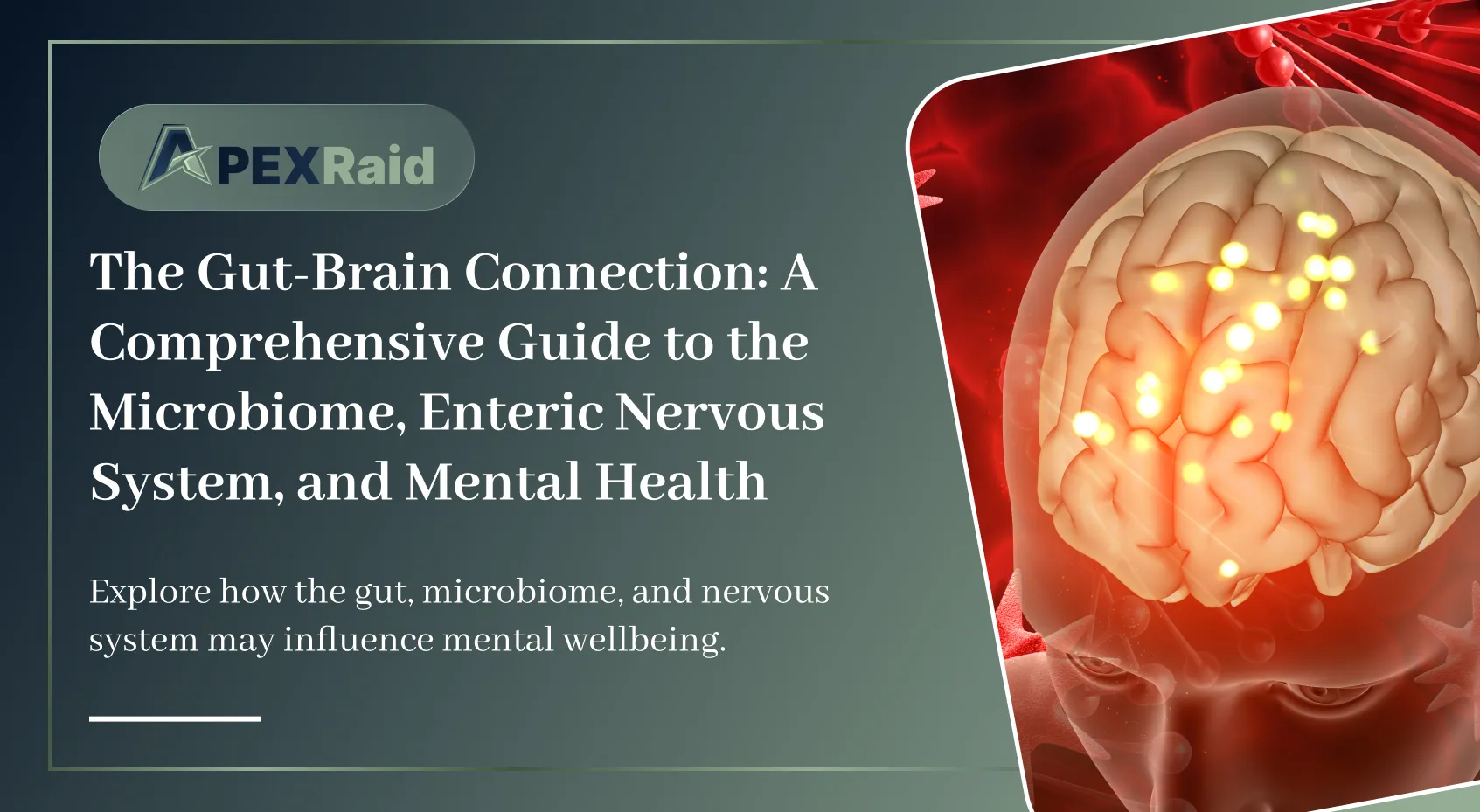
A comprehensive examination of the gut-brain axis — exploring the enteric nervous system, the microbiome's role in neurotransmitter production, the inflammation-depression link, and evidence-based strategies for optimizing gut health for mental wellbeing.
Read article →
A comprehensive physiological analysis of the sleep cycle, exploring the critical roles of REM and Deep Sleep in cognitive performance, physical repair, and the glymphatic clearance of neurotoxic waste.
Read article →
A comprehensive, evidence-based analysis of what research actually shows about meditation and yoga: mood, mental health, stress physiology, inflammation, longevity, and the nuanced reality behind the marketing.
Read article →
A comprehensive clinical guide to understanding when exercise shifts from health-promoting to harmful — exploring overtraining syndrome, the stress-recovery balance, warning signs, and evidence-based prevention strategies.
Read article →
A comprehensive clinical exploration of why addiction recovery is so hard — examining the neuroscience of the hijacked reward system, post-acute withdrawal syndrome, the role of shame, and why the struggle is bigger than willpower.
Read article →
A comprehensive clinical guide to understanding smell loss (anosmia) — exploring its neurobiological basis, common causes, the disorienting effects on memory and safety, the phenomenon of parosmia, and what recovery can involve.
Read article →