
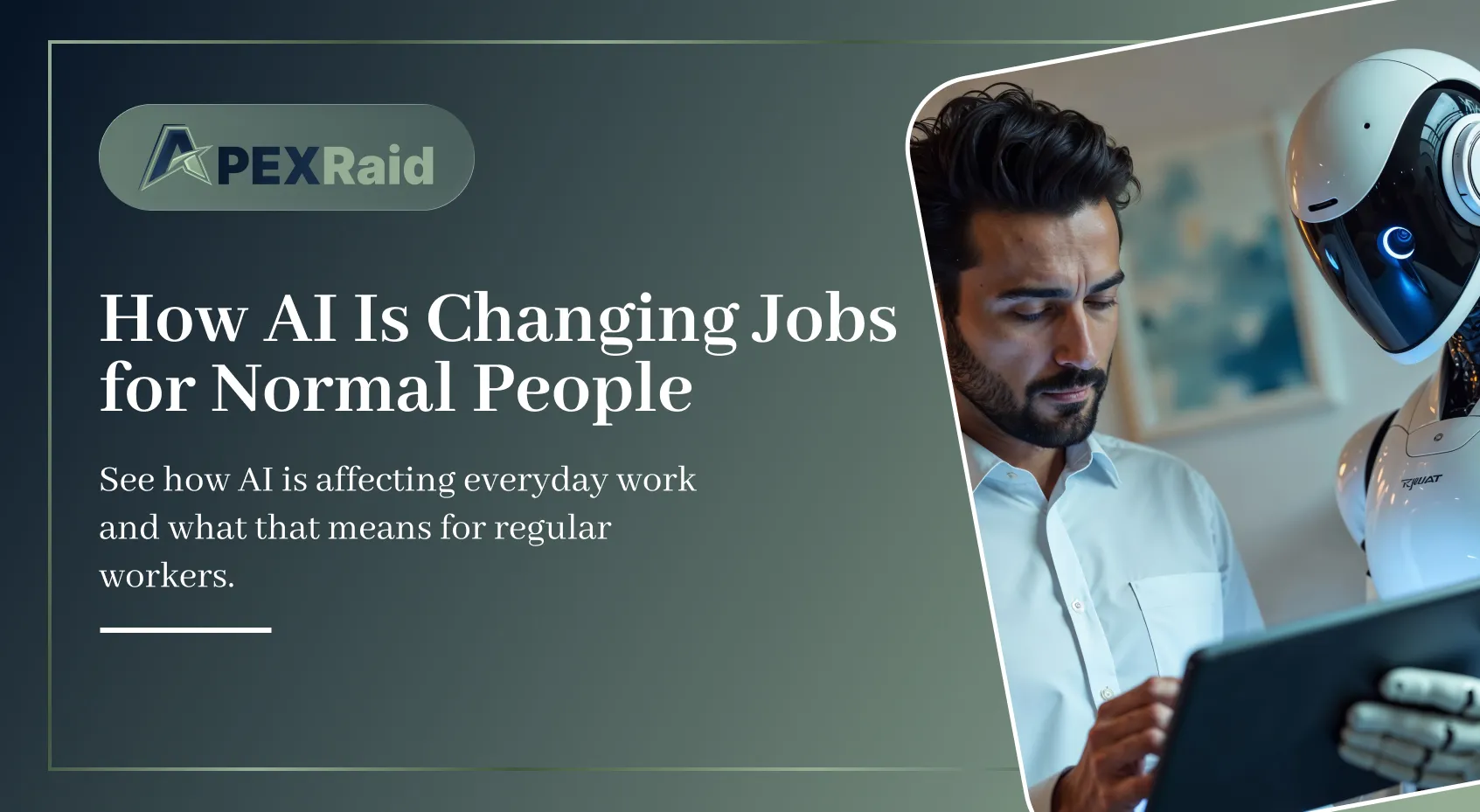
Whenever AI comes up, people often jump straight to extremes. Some say it will replace everything. Others say it will change nothing. The truth is more practical: AI is already changing many jobs in small but meaningful ways.
For most people, the biggest changes are not dramatic robot takeovers. They are workflow changes. The computer does not necessarily take the job. It takes over pieces of the job that used to eat up time.
What is changing first
AI is already helping with drafting emails, summarizing meetings, organizing notes, creating first drafts, generating ideas, and answering routine questions. That means some repetitive tasks are getting faster and easier.
In many jobs, that does not remove the person. It changes what the person spends time on. Instead of starting from a blank page, workers can begin with a draft and spend more effort on judgment, refinement, and communication.
Who feels it most
Office workers, support teams, marketers, writers, designers, analysts, and teachers are all seeing parts of their work shift. Even jobs that are not directly technical are being influenced by AI tools built into everyday software.
That shift is uneven. Some people barely notice it. Others feel it every day. Usually the difference comes down to how much of the job involves repetitive text, routine decisions, or information processing.
What workers can do
Instead of thinking only about replacement, it helps to think about augmentation. People who learn how to use AI well can often work faster and focus more on judgment, creativity, and communication.
That makes adaptability a valuable skill. The people who get comfortable reviewing AI output, improving prompts, and spotting mistakes are often the ones who gain the most from the change.
Risks to watch
There are also risks. If people trust AI too much, they may publish weak work, miss errors, or stop practicing the skills that matter in the long run. Teams may also rush adoption without setting clear rules for accuracy, privacy, and review.
That is why AI should be introduced with guardrails rather than enthusiasm alone. A tool that saves time still needs quality control.
How to stay useful
The safest strategy is to use AI for first drafts, summaries, brainstorming, and pattern-finding, then let a human handle the final decision. That is true whether the job is in support, writing, education, design, or office operations.
People who stay curious, keep learning, and protect their own judgment will usually do better than people who ignore the change completely.
Key takeaway
AI is changing jobs by automating some routine tasks and reshaping workflows. The people who learn to work with it will usually have the strongest advantage.
In most workplaces, the future is not all-or-nothing. It is a new mix of machine speed and human judgment.