
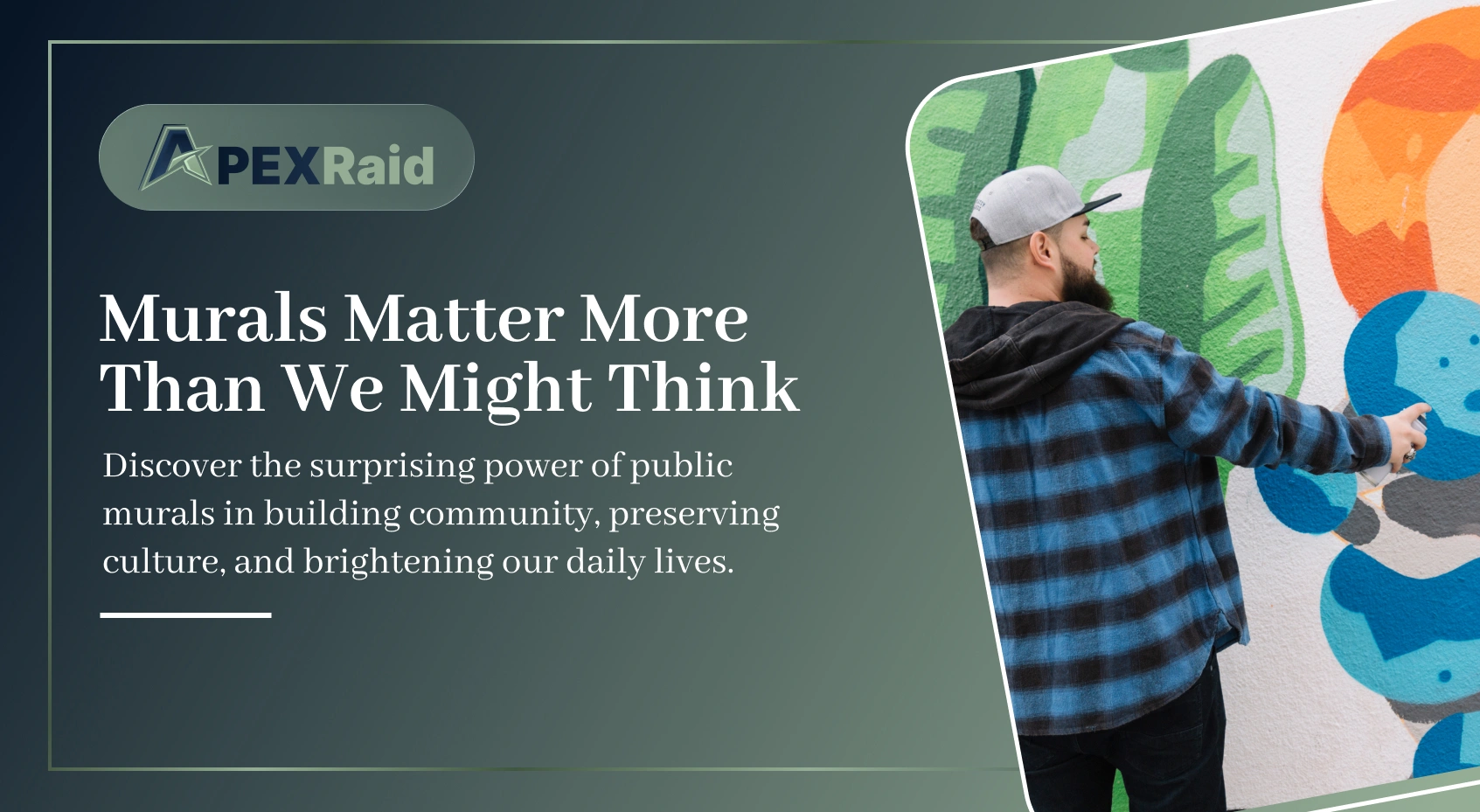
In the hierarchy of urban planning and civic budget allocation, public art is frequently relegated to the bottom of the ledger. It is viewed by many municipal governments as a luxury — a decorative afterthought to be considered only when the serious business of infrastructure, sanitation, and policing has been fully funded. Consequently, the public mural is often misunderstood as merely a large painting designed to obscure a decaying brick wall or deter illicit graffiti. However, an intersectional analysis of urban sociology, environmental psychology, and art history reveals a vastly different reality. The public mural is not an aesthetic luxury; it is a high-leverage sociological intervention. The deliberate application of color and narrative to the physical architecture of a city profoundly alters the psychological baseline of its residents, disrupts the psychological effects of urban decay, and serves as a vital, un-erasable archive of marginalized histories.
This guide provides a comprehensive, evidence-based examination of why murals matter, exploring their impact on psychological health, community identity, economic revitalization, historical preservation, and political resistance. A 2023 review in the Journal of Urban Design found that cities with significant public art investment report higher levels of resident well-being, stronger community cohesion, and measurable economic benefits in the areas where public art is concentrated.
Environmental Psychology and the Architecture of Stress
To understand the biological impact of a mural, one must understand the psychological toll of the modern urban environment. The architectural default of the late 20th and early 21st centuries is heavily utilitarian: vast expanses of gray concrete, glass, and steel, designed for maximum density and economic efficiency. Environmental psychologists refer to this as a 'hard' environment. Research on hard environments has found that exposure to monotonous, visually sterile urban landscapes is associated with elevated cortisol levels, reduced cognitive function, and increased aggression.
Prolonged exposure to monolithic, visually monotonous environments actively elevates cortisol levels in the human brain. The nervous system interprets the lack of visual complexity, natural forms, and color as a signal of scarcity and environmental hostility. This contributes to the chronic low-grade stress and heightened aggression frequently associated with dense urban living. A 2016 study published in the Journal of Environmental Psychology found that participants exposed to visually complex urban scenes showed significantly lower cortisol responses than those exposed to monotonous scenes, with the effect being particularly pronounced for scenes containing natural elements and vibrant colors.
A massive, brightly colored mural acts as a neurological circuit breaker. It introduces complex visual stimuli, vibrant palettes, and often, organic shapes into a sterile grid. When a commuter steps out of a gray subway station and is confronted by a forty-foot painting of a local landscape or abstract geometric patterns, the brain experiences a 'micro-restorative' moment. The visual interruption forces a cognitive shift, momentarily disengaging the brain's stress response. Public art effectively softens the psychological edges of the city, providing free, ambient mental health intervention for tens of thousands of residents daily. Research on attention restoration in urban environments has found that even brief exposure to visually complex public art can improve mood, reduce fatigue, and enhance cognitive function.
The Subversion of the Broken Windows Theory
In the realm of urban sociology, the Broken Windows Theory — introduced by James Q. Wilson and George Kelling in their seminal 1982 article in The Atlantic — posits that visible signs of neighborhood decay, such as a broken window, litter, or vandalism, signal a lack of social control, thereby encouraging further crime and disorder. For decades, the primary municipal response to this theory has been aggressive policing and the immediate painting over of unauthorized graffiti with sterile, gray 'anti-graffiti' paint, creating blocks of monotonous, institutional blankness.
The strategic deployment of public murals subverts this dynamic entirely. A high-quality, community-sanctioned mural reclaims the space. It replaces the aesthetic of neglect with the aesthetic of intentional investment. When a community commissions an artist to paint the side of a neglected grocery store, they are visually declaring jurisdiction over that space. Empirical data frequently supports this intervention; areas featuring large-scale, culturally relevant murals often see a localized decrease in opportunistic vandalism. A 2019 study in Philadelphia found that blocks with community murals experienced 30% fewer incidents of graffiti vandalism compared to control blocks without murals.
The psychological mechanism is straightforward: people are less likely to deface a piece of art that reflects their own identity or was created by a member of their community than they are to deface a blank, anonymous municipal wall. The mural acts as a visual guardian of the neighborhood's dignity. This phenomenon is supported by research on place attachment, which has found that individuals who feel a strong emotional connection to a place are more likely to engage in behaviors that protect and preserve it.
The Economics of Public Art
Beyond its psychological and sociological benefits, public art also generates measurable economic value. Research on the economic impact of public art has documented several pathways through which murals contribute to local economies:
- Tourism and cultural visitors: Murals become tourist attractions in their own right. Cities like Philadelphia, which is home to over 4,000 murals through its Mural Arts Program, attract significant numbers of cultural tourists who visit specifically to see the murals. This generates spending on accommodation, dining, and local businesses.
- Business district revitalization: Murals attract foot traffic to business districts, increasing visibility for local shops and restaurants. A study of San Francisco's Clarion Alley found that businesses located near popular murals reported 15-25% higher foot traffic and revenues compared to similar businesses in areas without murals.
- Property value increases: The presence of high-quality public art is associated with increased property values in the surrounding area. However, this benefit also carries the risk of gentrification, as discussed below.
- Job creation: Public art projects create jobs for artists, fabricators, installers, and project managers. The Mural Arts Program in Philadelphia employs over 100 artists annually and supports hundreds of additional jobs in related fields.
A comprehensive review by the Urban Institute found that every dollar invested in public art generates between $3 and $5 in economic returns, making it one of the highest-return investments available to cities.
Historical Preservation and Political Resistance
The most potent murals function as un-erasable historical archives. Traditional history is typically curated by those in power and codified in textbooks, museums, and bronze statues — institutions that have historically excluded marginalized communities. The mural democratizes historical preservation by placing the narrative directly into the street, forcing the public to engage with it.
This tradition is most famously exemplified by the Mexican Muralism movement of the 1920s, led by figures like Diego Rivera, David Alfaro Siqueiros, and José Clemente Orozco. They rejected the elitism of the gallery, painting massive, politically charged frescoes in public buildings to educate and radicalize a largely illiterate working class. Rivera's murals at the National Palace in Mexico City depict the entire history of Mexico, celebrating indigenous heritage and critiquing colonialism and capitalism.
Modern murals continue this legacy of resistance. In neighborhoods facing aggressive gentrification, where long-standing residents are being displaced by rising rents and corporate development, the mural is an act of defiance. A massive portrait of a local civil rights leader or a depiction of the neighborhood's indigenous roots serves as a visual anchor. It declares: 'We were here, this is our history, and we will not be quietly erased.' The mural ensures that even as the demographics of the neighborhood are economically engineered to change, the cultural memory of the original inhabitants remains literally baked into the architecture. Research on murals and resistance has documented how communities have used mural projects to protest displacement, celebrate cultural heritage, and assert their right to the city.
Murals as Community Identity Formation
Beyond historical preservation, murals play a critical role in the formation and reinforcement of community identity. Research on place identity and public art has found that community-generated murals strengthen residents' sense of belonging, increase civic engagement, and build social cohesion.
When a community collectively creates a mural, the process itself is as important as the final product. The design process requires residents to come together, discuss what their community represents, and agree on shared values and narratives. This is a form of civic dialogue that builds social capital — the relationships and trust that enable communities to function effectively. Studies on social capital and public art have found that neighborhoods with active public art programs have higher levels of trust, stronger social networks, and greater collective efficacy — the belief that the community can work together to achieve common goals.
This is particularly important for immigrant and minority communities, whose cultural narratives may not be represented in mainstream institutions. Murals provide a visible, accessible way for these communities to assert their cultural identity and educate others about their heritage. Research on immigrant murals has documented how these projects serve as 'cultural anchors' that help preserve language, traditions, and history across generations.
The Role of Murals in Post-Conflict Reconciliation
One of the most powerful applications of public murals is in post-conflict reconciliation. Research on peacebuilding and public art has shown how murals can be used to acknowledge past trauma, celebrate shared identity, and imagine a peaceful future.
In Northern Ireland, murals have been a central feature of community expression since the Troubles. While many murals historically served as sectarian markers, recent peace-wall murals have been used to promote dialogue and reconciliation. In South Africa, community murals played a role in the post-apartheid Truth and Reconciliation process, providing a visual space for communities to process collective trauma and express hope for the future.
In Bosnia and Herzegovina, murals have been used to memorialize victims of the war and promote inter-ethnic understanding. Research on murals and peacebuilding has found that these projects create opportunities for dialogue across ethnic divides, build shared identity, and promote healing in communities that have experienced violence.
Global Case Studies: Murals in Action
Several cities around the world have demonstrated the transformative power of public murals through sustained investment and community engagement.
Philadelphia, USA: The Mural Arts Program, founded in 1984, has created over 4,000 murals across the city. The program is now one of the largest public art programs in the world and serves as a model for other cities. Independent evaluations have found that the program is associated with significant reductions in vandalism, increased tourism, and improved community well-being.
Valparaíso, Chile: The city's brightly painted hillside houses and murals have transformed the city into a UNESCO World Heritage site and a major tourist destination. The murals reflect the city's working-class history and rebellious spirit, while also generating significant economic benefits through tourism.
Belfast, Northern Ireland: The city's murals have evolved from sectarian markers to peace-building tools. Research on Belfast's murals has documented how community-led mural projects have contributed to reconciliation and the development of a shared, inclusive identity.
Berlin, Germany: The East Side Gallery, a 1.3-kilometer section of the Berlin Wall covered in murals, is the largest open-air gallery in the world. The murals document the history of the Wall and the city's division, serving as both a memorial and a symbol of hope.
The Paradox of Gentrification and 'Artwashing'
However, the power of the mural is a double-edged sword, leading to the complex paradox of artwashing. Because murals successfully beautify neighborhoods, reduce perceived crime, and create a vibrant 'bohemian' atmosphere, they frequently attract the very forces of gentrification that displace the original residents. Real estate developers explicitly use the presence of authentic street art to market luxury condominiums to wealthy buyers seeking an 'edgy, authentic' urban experience. The mural, originally painted to celebrate the working-class community, inadvertently becomes the marketing brochure for their eviction.
Research on artwashing has documented numerous examples of this phenomenon, particularly in cities like New York, London, and San Francisco. Developers commission murals specifically to increase property values and attract affluent residents, while simultaneously displacing the communities that inspired the art.
Navigating this paradox requires cities to pair funding for public art with robust anti-displacement housing policies. Art cannot save a neighborhood if the people who inspired the art can no longer afford to live there. Research on equitable public art policy has identified several strategies: community ownership of art projects, inclusionary zoning to preserve affordable housing, and public-private partnerships that include community benefits agreements.
Conclusion
To view a mural as merely a large, pretty painting is to fundamentally misunderstand the mechanics of urban sociology. Murals are the neurological shock absorbers of the concrete jungle, breaking the visual monotony that drives urban stress. They are the visual reclamation of neglected spaces, defying the narrative of decay. They are economic engines that attract visitors, support local businesses, and generate significant returns on investment. They are unapologetic, towering archives of communities fighting for their right to be remembered. And when thoughtfully integrated with equitable housing policy, they can be powerful tools for community building, cultural preservation, and social cohesion.
When a neighborhood paints its walls, it is not just decorating; it is speaking, loud and permanent, into the public square. The mural is a declaration of existence, a demand to be seen and remembered. In a world where marginalized communities are increasingly invisibilized and displaced, the mural stands as a defiant assertion of presence and a permanent record of the stories that official histories often erase.
As the body of research on public art continues to grow, the evidence is clear: murals are not a luxury; they are a necessity for healthy, vibrant, and just cities. The question is not whether cities should invest in murals, but how they can do so in ways that maximize their benefits while minimizing their risks.