
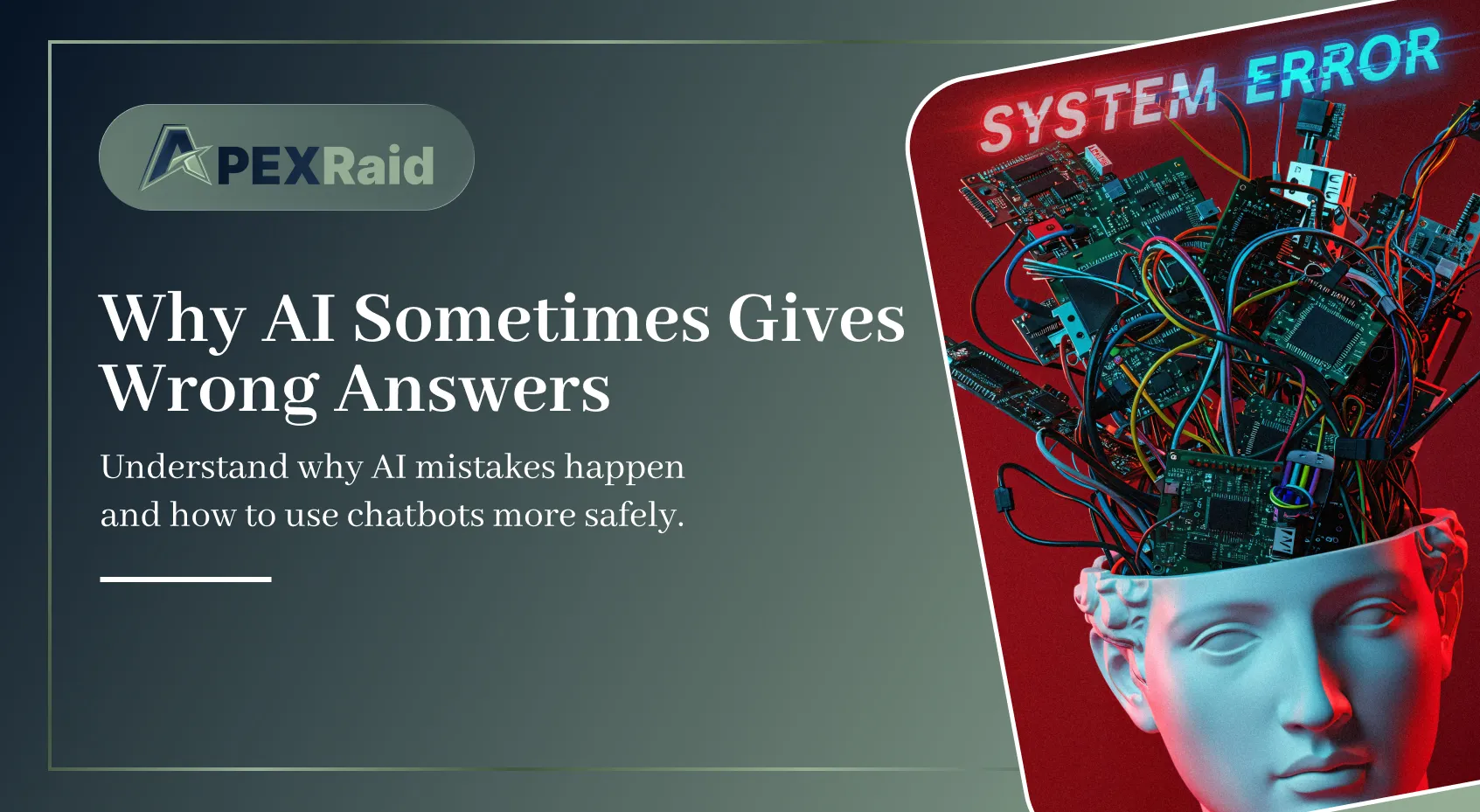
AI can be incredibly useful and still be wrong. That is not a bug in the sense most people expect. It is often a normal result of how the system works. AI predicts likely answers, but prediction is not the same as truth.
That difference matters a lot when the question is specific, technical, or requires real-world context. A wrong answer can be harmless in a casual conversation, but a serious problem when you are making a decision that affects money, health, safety, or reputation.
Common reasons for mistakes
AI can give wrong answers when the training data is incomplete, when the prompt is vague, when the topic is new, or when the model is trying to fill in a gap with a plausible guess. It may also mix together facts from different sources in a way that sounds right but is not.
Another issue is that AI can be overconfident. It often presents answers in a clean, polished style even when it should be uncertain. That polished style can make people trust it more than they should.
Why this happens
The system is optimized to produce the most likely helpful response, not to verify truth from first principles. Unless it has access to strong tools like search, databases, or citations, it is working from pattern prediction alone.
That is why AI is excellent for drafting and brainstorming, but risky when you need exact facts, current information, legal guidance, or medical advice. The model may sound like an expert even when it is really making an educated guess.
Examples of failure
Sometimes AI gets dates wrong. Sometimes it invents names, mixes up similar concepts, or gives an answer that is true in one context but false in another. It can also fail when a question depends on local rules, a recent event, or a detail that was never well represented in the training data.
That does not mean the tool is useless. It means the tool has limits, and those limits become more obvious when the question is narrow or high stakes.
How to reduce mistakes
Use specific prompts, ask for sources, compare the answer with trusted references, and check whether the response makes logical sense. When the stakes are high, treat AI as a helper, not a final authority.
It also helps to ask the model to show uncertainty. A careful answer that says, “I am not sure” is more trustworthy than a confident answer that happens to be wrong.
How to use it safely
If the response will influence a decision, verify it before acting. If the answer is vague, ask a follow-up. If the topic is important, consult original sources or a professional. AI should reduce your workload, not remove your judgment.
Key takeaway
AI sometimes gives wrong answers because it predicts language rather than verifying truth. The more important the decision, the more human checking you need.
The safest approach is simple: use AI for speed, but use your own judgment for final trust.