
← Education
Education
The Future of E-Learning
An analysis of the technological and pedagogical shifts in digital education, moving from static video lectures to adaptive, AI-driven learning environments.

For the first two decades of the internet, the concept of 'e-learning' was fundamentally limited by its architecture. It consisted almost entirely of taking traditional, physical classroom materials (textbooks and hour-long lectures) and simply digitizing them as PDFs and static video files. This was not a revolution in education; it was merely a change in distribution. However, the modern intersection of artificial intelligence, high-speed connectivity, and cognitive science is actively destroying the static 'broadcast' model of education. The future of e-learning is not about watching a video on a screen; it is about interacting with highly adaptive, personalized digital environments that dynamically restructure themselves around the neurological reality of the individual learner.
### The Failure of the Broadcast Model
The traditional educational model, whether delivered in a physical university lecture hall or via a static online video, is inherently flawed. It relies on the 'Broadcast Model'—a single instructor delivering a standardized, uniform stream of information to a massive, heterogeneous group of students simultaneously.
This model completely ignores the reality of human cognitive variation. In a class of 100 students, some will grasp a concept in two minutes, while others require twenty. In a static broadcast model, the fast learners are forced into extreme boredom, while the slower learners are left behind, accumulating massive gaps in their foundational knowledge that guarantee future failure. The early iterations of Massive Open Online Courses (MOOCs) attempted to scale this flawed model globally, resulting in abysmal completion rates (often hovering below 10%), proving that simply placing a camera in front of a lecturer does not constitute effective digital education.
### The Rise of Adaptive Learning Algorithms
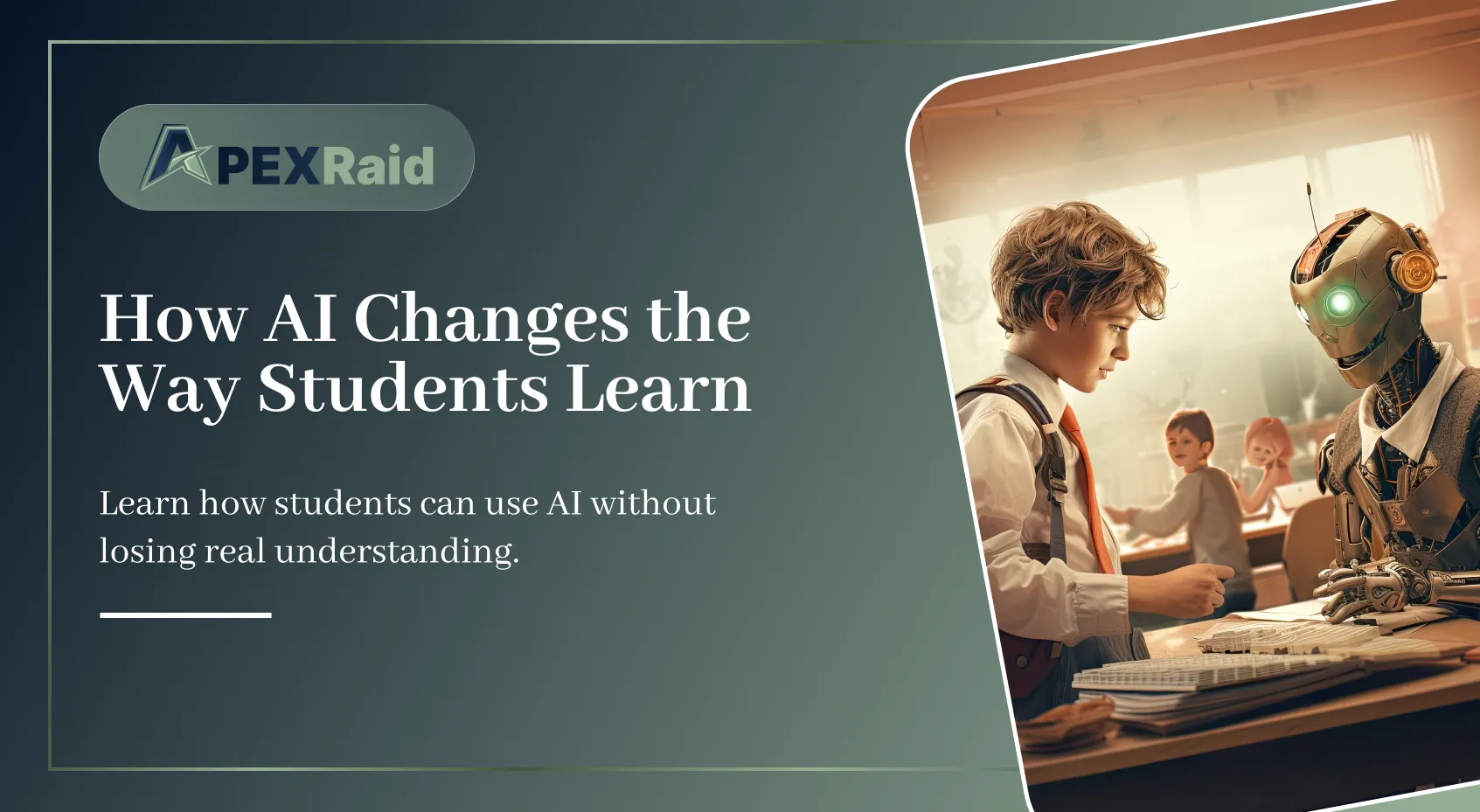
The true revolution in e-learning is the implementation of Adaptive Learning platforms powered by Artificial Intelligence (AI). Instead of a static syllabus, an adaptive platform acts as a relentless, highly personalized digital tutor.
When a student interacts with an adaptive platform, the software does not simply grade their answers as right or wrong. The algorithm aggressively analyzes thousands of micro-data points in real-time: how long the student hesitated before answering, the specific type of distractor answer they chose, the sequence in which they accessed the material, and the specific time of day they are most cognitively active.
Using this vast data set, the AI continuously, dynamically alters the curriculum for that specific individual. If the algorithm detects that the student fundamentally misunderstands a core concept (e.g., calculating fractions), it will immediately halt the progression of the course. It will algorithmically generate a series of remedial exercises, attacking the specific cognitive block from multiple different pedagogical angles until mastery is statistically proven. Conversely, if a student instantly masters a topic, the software will automatically accelerate them past the redundant material. This ensures that the student is permanently operating at the absolute edge of their competence—the 'Zone of Proximal Development'—maximizing engagement and eliminating the inefficiencies of the broadcast model.
### Microlearning and Cognitive Load
The future of e-learning is also heavily dictated by the findings of cognitive psychology, specifically regarding 'Cognitive Load Theory.' The human working memory is severely limited in its capacity to process novel information. Forcing a student to consume a dense, uninterrupted 60-minute video lecture violently overwhelms this capacity, resulting in catastrophic knowledge retention failure.
Modern e-learning architecture is pivoting aggressively toward 'Microlearning.' Instead of massive, monolithic lectures, educational content is atomized into highly focused, single-objective bursts of learning, typically lasting no longer than 3 to 7 minutes. A student might watch a 4-minute video explaining a single concept, immediately followed by a short, interactive quiz that forces active recall, and then a practical, simulated application of the concept.
This atomized structure respects the biological limits of the human brain. It prevents cognitive overload, allows for highly specific, targeted learning interventions, and crucially, fits seamlessly into the fractured, high-speed reality of modern adult life, allowing professionals to consume educational content during a commute or between meetings rather than dedicating massive, continuous blocks of time.
### Gamification and the Economics of Engagement
The most significant hurdle in e-learning is not the delivery of information; it is the maintenance of human motivation. Without the physical presence, social pressure, and immediate accountability of a traditional classroom, online learners frequently abandon their courses.
To combat this, e-learning platforms are heavily integrating 'Gamification'—the application of video game mechanics to non-game environments. This involves implementing highly engineered systems of rapid feedback, variable rewards, progression trees, and social leaderboards.
However, elite gamification is not simply adding superficial 'badges' or 'points' to a boring quiz. It is the deep structural integration of interactive, high-stakes simulations. Medical students are not just reading about surgical procedures; they are executing them in highly realistic Virtual Reality (VR) environments where mistakes have simulated, severe consequences. Corporate employees are not watching sexual harassment compliance videos; they are navigating complex, branching dialogue trees with AI-driven avatars to practice conflict resolution in real-time.
The future of e-learning represents the total democratization of elite education. By uncoupling the quality of instruction from the physical limitations of a classroom, and utilizing artificial intelligence to provide the equivalent of an incredibly patient, highly optimized private tutor for a fraction of the cost, digital education is rapidly transitioning from a poor substitute for the physical classroom into an objectively superior pedagogical tool.